
Garage Door Won’t Close? That’s a Security Problem
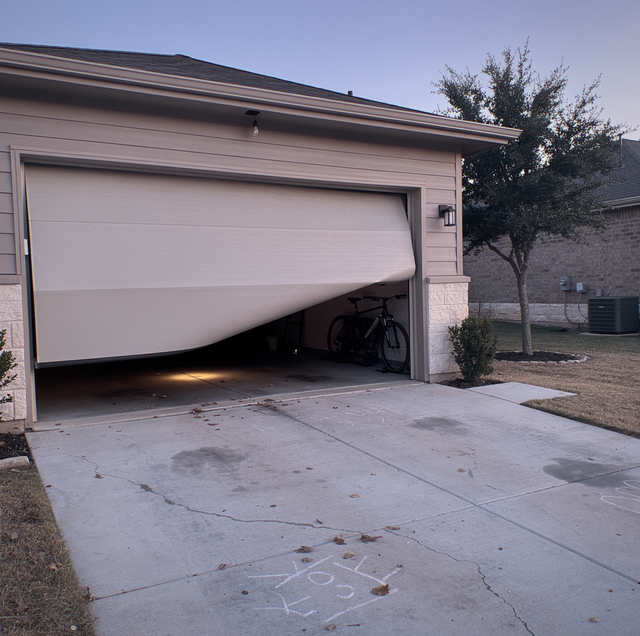
A garage door that stops partway down, or refuses to move at all, looks like a problem for tomorrow at nine in the evening. By one in the morning the house is quiet, and the open bay is the only thing on the street doing anything at all. By six, the block is awake and has had all night to notice it. Nothing about that door repairs itself in between, and none of the hours it sits open are neutral.
What the Next Few Hours Actually Cost
At nine, most of what changes is invisible. The household is awake, the lights are on, and an open garage at that hour reads to the street as an ordinary evening. Whoever notices it from the sidewalk has no way to tell a stuck motor from a door somebody simply forgot to close. By one in the morning, that difference stops mattering less and starts mattering more: the house is asleep, nobody is checking the garage again before turning in, and the open bay sits unattended for as many hours as anyone sleeps through. By six, foot traffic and cars are back on the street, delivery drivers and dog walkers included, and the garage has had the entire stretch between nine and six to sit open with nobody watching it at all. None of those three points is when the risk starts. The risk starts the moment the door stops closing, and each hour after that adds more of the same exposure.
The Door Into Your House Is Often the Weakest One
In most attached garages, the door connecting the garage to the living space is a solid or steel slab, the same as many exterior doors use, but it is almost always hung with a passage or privacy knob instead of a deadbolt, because the building plan counts it as an interior opening. That knob turns freely from either side, and the jamb around it is ordinary interior jamb stock, not the reinforced framing built into a home's actual exterior door openings. Once the overhead door is open, that passage door becomes the only thing standing between the house and anyone who walks in, and it was never built to be that. An open garage does not just expose tools and boxes. It exposes the one door in the house least built for the job it is suddenly doing.
What Your Open Garage Actually Holds
A garage rarely holds only a car. It typically holds a pegboard of the household's own pry bars, hammers, and cutting tools, along with a bicycle or two, a second vehicle, a chest freezer stocked with a season's worth of groceries, and the water heater or HVAC equipment that keeps the house running. Many garages also double as the spot where a spare house key hangs on a hook. None of that is a problem behind a working door. All of it becomes available to whoever walks in while the door won't close.
Weather and Wildlife Do Not Wait for Morning
Weather does not pause for a broken opener. Wind-driven rain reaches storage boxes and drywall that were never built to get wet; the humidity that already promotes rust on springs and cables settles onto anything metal left exposed overnight, and a garage that normally holds a stable few degrees off the outdoor temperature swings wide open to whatever the night brings. Wildlife notices an open garage faster than most people expect. Raccoons, rats, and the occasional snake are drawn in by pet food, trash, or simply a dry, dark space, and the sign of a visitor by morning is usually chewed packaging, scattered droppings, or a knocked-over trash can rather than anything more dramatic. Neither problem is solved by hoping the door holds until sunrise.
An Open Door Advertises Itself All Night
A garage door stuck a foot off the ground, or standing open under a porch light, is visible from the street in a way most security gaps are not. Unlike a window that is merely unsecured or a side gate left ajar, an open overhead door is lit, obvious, and easy to read from a passing car. It tells anyone who notices, whether or not they mean the house any harm, that something has been left unattended, which invites the question of what else has. That signal reaches anyone driving by, walking a dog, or glancing over from a neighboring yard, whether or not the street itself is watching.
Why the Door Stopped Going Down in the First Place
A door that never begins moving down at all, one that simply ignores the close command rather than reversing partway through, usually points to the up-limit switch or the opener's travel settings rather than the safety sensors. Older openers set that stopping point with a physical limit switch; most openers built in the last decade or so store it electronically in a travel module, and either one failing, or a console that has locked itself out after repeated attempts, can leave the opener refusing to send the door anywhere.
Deciding What to Do Before Bed
The wrong response is trying to force the issue. Taping over, blocking, or misaligning the photo-eye sensors to force a close is never a safe workaround. It disables the system built to keep the door from closing on a person, pet, or vehicle. That workaround does nothing to fix whichever part actually failed, and it removes the one safeguard the system has. The release cord is safe to use only with the door fully closed and the counterbalance intact, and it is never a way to hold a door open. Until a technician has looked at it, the realistic options are to lock the interior door if it has a deadbolt, move the obviously portable items, such as bikes and anything with keys, out of easy reach, and treat the open garage like any other unsecured entry point until it's resolved.
Ordinary Precautions Until the Technician Arrives
A stuck-open door does not carry the scale of a break-in that has already happened. It does call for the same ordinary precautions people already take for a front door left ajar: locking what can be locked, moving what can be moved, and not leaving the rest to chance until the garage closes again. The fix is mechanical, and it comes from a technician replacing or resetting whichever part failed, not from anything said, forced, or waited out overnight.
Frequently Asked Questions
Not on its own. Even with a deadbolt added, it's typically mounted with the short screws included in a standard lock kit, driven into the same lightweight jamb stock used on any interior door, rather than the long screws and reinforced strike plate that anchor a home's actual exterior doors into the framing behind them. The slab itself is usually solid or steel. The hardware hung on it is what a closet door gets, and a solid slab is only ever as strong as the hardware holding it in place.
The malfunction gives no reason to. The reason to do it anyway is that you are already thinking about who can get into the garage. A keypad code and any programmed remotes keep working on their own schedule, separate from whatever failed tonight, so clearing old ones isn't part of the repair. If you're unsure who still has access, running the opener's code-clearing function and reprogramming only the codes you want to keep is a separate step worth doing the same night.
No, and it isn't necessary either. A sectional door's position is held by its torsion spring balance, not by the motor, so a door that has stopped partway down stays exactly where it is whether or not the opener has power. Cutting power only stops another remote press from retrying whatever already failed; it doesn't close the door, and it doesn't need to be done as a security step.
The garage remote clipped to a visor or left in the glovebox of whatever is parked inside. It's worth nothing to someone walking through, but it opens the door itself from wherever it ends up, which a stolen bike or a cordless drill can't do. Bringing it inside for the night isn't the same as reprogramming the opener and doesn't fix anything; it just keeps one more way into the house from leaving with a stranger.
It records what happens, which matters afterward, but a camera doesn't stop anyone from walking through an open door the way a locked interior door does. A camera and an unsecured entry solve two different problems, and only one of them is within a homeowner's control the night the opener fails.
Yes, beyond the mess. Raccoons and rodents will chew at the low-voltage wire stapled along the track that feeds the photo-eye sensors, which turns into its own separate repair. The warmth of the opener's motor head also attracts small animals seeking a place to nest, and a technician has to clear them out before doing anything else with the unit.
Treat the open bay as an unsecured entry and get someone out to it — Austin garage door opener repair covers the up-limit switch and travel module behind a door that ignores the close command, and that same coverage extends to Brushy Creek garage door repair. Call (512) 456-3781.
