
Belt-Drive vs. Chain-Drive Opener: Which One Quiets the Rattle
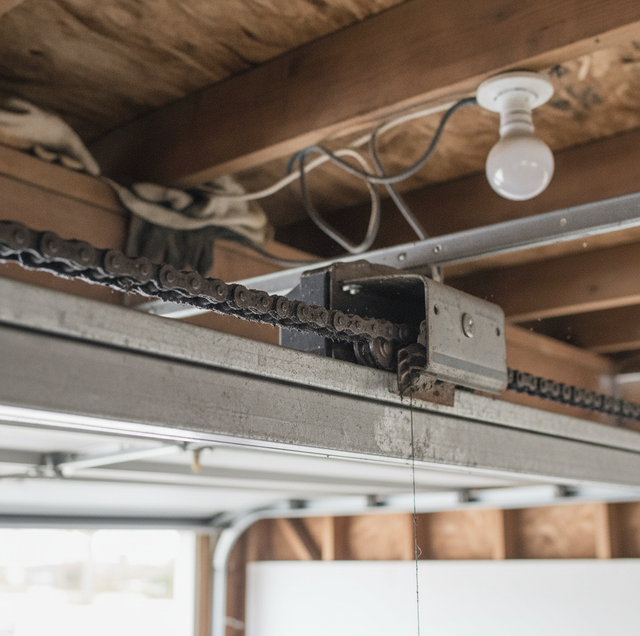
Every automatic garage door opener does the same basic job. A motor drives a trolley along a rail bolted to the ceiling, and that trolley pushes and pulls the door open and shut. What separates one opener from the next is not the motor or the rail. It is the thing running down the middle of that rail that actually moves the trolley. On most residential units, that comes down to two choices: a chain or a belt. The mechanism is nearly identical up to that one part, and that one part is what you hear, what you pay for, and what you live with for the next fifteen years.
Getting the choice right is less about horsepower and more about where your garage sits and who is trying to sleep near it. Here is how the two work, why they sound so different, and how to match one to your house.
Quick Answer: A chain-drive opener uses a metal chain to move the door and is durable and lower cost, but louder. A belt-drive opener uses a reinforced rubber belt, runs much quieter and smoother, and costs a bit more. For most homeowners, noise is the deciding factor: pick a belt if a bedroom or living space sits above or beside the garage, and a chain if it is detached or noise is not a concern.
How Both Openers Actually Move the Door
Strip down a chain-drive and a belt-drive opener, and they share the same skeleton. Both have a motor head that hangs at the back of the rail, a T-rail or box rail that runs from that motor toward the door, and a trolley (sometimes called the carriage) that slides along the rail. A curved arm links the trolley to the top section of the door. When you press the button, the motor turns the sprocket, the trolley travels up the rail, and the door follows it open. Reverse the motor, and the door comes back down.
The only real difference is what connects the motor's sprocket to the trolley and drags it along. On a chain-drive, that connector is a metal roller chain, essentially the same design as the chain on a bicycle, made of steel links riding over toothed sprockets at each end. On a belt-drive, it is a wide reinforced band that loops around a pulley instead of a toothed sprocket. Everything else, the rail, the trolley, the arm, the safety sensors near the floor, works the same way in both.
That shared design is why the two feel so similar to install and operate, and why the differences that matter show up in a short list of practical factors rather than in raw lifting ability.
Chain-Drive: The Durable, Proven Standard
The chain-drive opener has been the default in American garages for decades, and that longevity is earned. A steel chain is tough, tolerant of temperature swings, and comfortable moving heavy and oversized doors, including two-car doors and solid wood sections. It is also the lower-cost option up front, which keeps it popular for builders and budget-minded replacements.
The trade-off is noise. A chain is metal links riding over metal sprockets, and as it moves, it rattles, clanks, and transmits a low vibration back through the rail and up into the ceiling framing. Anyone standing in the garage hears a distinct metallic clatter, and that vibration carries through the structure. In a detached garage, a workshop, or any setup where the door is well away from where people relax and sleep, none of that matters, and the chain's durability and price make it a sensible pick.
Chain drives do ask for a little attention over the years. The chain needs occasional lubrication, and its tension should be checked, because a chain that runs dry or hangs loose gets noticeably louder and rougher. That upkeep is simple, but it is upkeep that the belt largely avoids.
Belt-Drive: The Quiet, Smooth Alternative
A belt-drive swaps the steel chain for a wide, reinforced belt. The belt is not plain rubber. Good ones are built with internal steel cords, fiberglass, or polyurethane reinforcement so they carry the load without stretching. Because a flexible band flexes silently instead of clattering over sprockets, the belt removes the metal-on-metal noise that defines a chain opener. The result is a door that opens and closes with a smooth, near-silent hum and far less vibration reaching the ceiling.
That quiet is the whole reason belts exist, and it pays off in a specific situation: any garage with living space directly above or beside it. If there is a bedroom over the garage, a bonus room to the side, or a nursery sharing a wall, a belt-drive keeps an early-morning or late-night cycle from waking the house. In attached garages, which describe most modern homes, that alone is often reason enough.
Belts cost a bit more than chains up front, and there is one limit worth knowing. On the very heaviest or largest doors, a builder may still spec a heavier-duty belt, a chain, or another drive type rated for that weight. For the typical single or double residential door, though, a quality belt handles the load without complaint. Maintenance is lighter too: a belt does not need the periodic lubrication a chain does, so once it is installed, it mostly stays out of mind.
Chain vs Belt at a Glance
| Factor | Chain-Drive | Belt-Drive |
|---|---|---|
| Noise | Louder; metallic clatter and vibration | Much quieter; smooth, near-silent |
| Cost | Lower up front | Somewhat higher |
| Durability | Excellent, long proven track record | Long-lasting when reinforced with steel or fiberglass |
| Best for | Detached garages, workshops, budget jobs | Attached garages, bedrooms above or beside |
| Maintenance | Occasional lubrication and tension checks | Little routine upkeep |
For most homeowners, the table collapses to a single question: Is there a room close enough to hear the opener run? If yes, the belt usually wins. If not, the chain's lower cost and rugged reputation make it hard to beat.
Two Other Drive Types Worth Knowing
Chain and belt are the two you will see most, but they are not the only openers on the market. Two others come up often enough to mention.
A screw-drive opener replaces the chain or belt with a long threaded steel rod. The trolley rides on that rod, and turning the rod moves the trolley. Screw-drives have few moving parts and can be quick, though they sit in the middle of the noise range, quieter than a bare chain but not as hushed as a belt.
A direct-drive opener takes a different approach entirely. The motor itself travels along a fixed chain built into the rail, so there is very little to vibrate or wear. Direct drives are known for very quiet operation and a low parts count, which is why some homeowners choose them for the same rooms-nearby reason they would consider a belt.
Neither changes the core decision for most houses, but if a standard chain or belt does not fit your situation, they are worth asking about.
Features Both Openers Share
Whichever drive you pick, you do not give up the modern conveniences. Both chain-drive and belt-drive openers are available with battery backup, so the door still works during a power outage, and with smart controls that let you open, close, and check the door from your phone. Both come in a range of motor strengths, and the right unit should be rated for the size and weight of your particular door rather than chosen on drive type alone. The drive is the variable that shapes noise, cost, and upkeep; the smart features and safety systems ride along on either one.
One point applies to every opener regardless of type: installation is a job for a professional. Mounting the rail, setting the travel limits, and aligning the safety sensors take the right tools and know-how, and the door's torsion springs and lifting cables are under extreme tension that only a trained technician should ever touch. If you are doing any work around an existing opener, disconnect its power first, and leave anything involving the springs or cables to a pro.
Frequently Asked Questions
A chain pulls the trolley with a series of metal links that rattle and vibrate against the rail as they ride over the sprocket teeth. A belt is a single, solid, reinforced band that flexes silently as it moves, so it never produces the metal-on-metal clatter. Removing that clatter is exactly what makes a belt opener so much quieter; the noise a chain makes is the sound of the links themselves striking metal.
Yes. A steel chain handles heavy and oversized doors well and is extremely durable, which is a large part of why it has been the long-standing industry standard. Strength is rarely the reason anyone chooses a belt over a chain. If a door is so heavy that a standard chain struggles, the answer is usually a heavier-rated unit rather than a switch to belt, so lifting power is not where the two drives really diverge.
It matters most when there is a bedroom or living space directly above or beside the garage. The vibration from a chain opener travels through the shared framing and into those rooms, so a cycle at 6 a.m. or 11 p.m. can carry right through the floor or wall. An attached garage tucked under a bedroom is the classic case for a belt, and it is the single situation where the quiet is worth the most.
Not in a way that should drive your decision, and the two wear differently. A chain slowly stretches with age, which is why it needs the occasional tension adjustment; a belt does not stretch that way, so what eventually wears on it are the cogs, or teeth, that grip the pulley. A quality reinforced belt is warrantied for many years of daily cycling, so durability is rarely the tiebreaker, and noise usually decides it.
The chain does. A chain drive needs occasional lubrication and periodic tension checks to keep running quietly and smoothly, because a dry or loose chain gets louder and rougher over time. A belt drive needs less routine upkeep and no regular lubrication, so beyond keeping the sensors clean and the hardware tight, it largely takes care of itself. The belt is the lower-maintenance option in addition to being the quieter one.
No, and one alternative frees up ceiling space entirely. A wall-mount, or jackshaft, opener bolts to the wall beside the door and drives the torsion shaft directly, rather than running a trolley down an overhead rail, which clears the ceiling for storage or a tall vehicle. Screw-drive and direct-drive units are two more options, but the side-mount is the one worth knowing when overhead room is tight.
Ask which opener fits your garage — get a quieter, smoother door dialed in right the first time. Squared Away Garage Door Service serves Cedar Park and Central Texas. Call (512) 456-3781.
