

Is Your Garage Door Out of Balance? The 30-Second Test
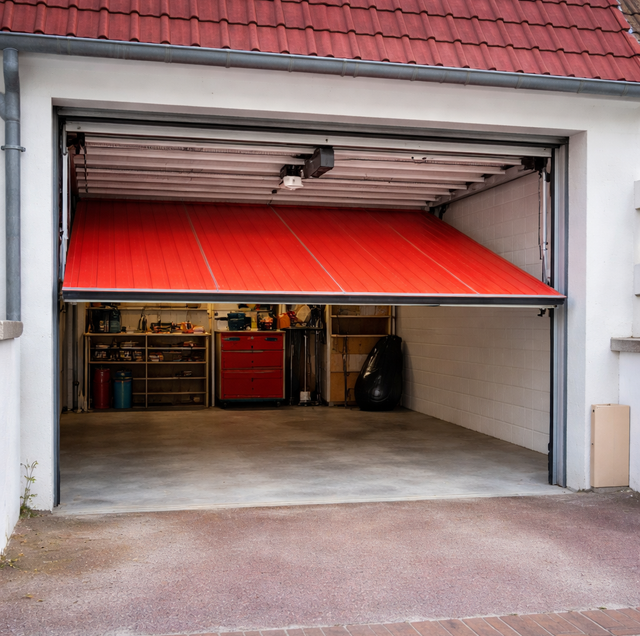
Quick Answer: A balanced garage door is counterbalanced by its springs, so it feels nearly weightless and holds position wherever you leave it once the opener is disconnected. To test it, close the door, pull the opener's emergency release cord, then lift the door by hand to about waist height and let go. A balanced door stays put. A door that drops or slams down has a weak or failing spring and is too heavy. A door that rises on its own has springs wound too tight. Only run this test on a door that is on its track with an intact spring, and re-engage the opener when you finish. Never adjust or replace the springs yourself; that is high-tension work for a technician.
A garage door is the heaviest moving object in most homes, often 150 pounds or more, yet a healthy one lifts with two fingers. That trick is not the opener doing the heavy lifting. The springs above the door carry the weight, and the opener only nudges the door the last bit. When that balance drifts, the door turns from a smooth, quiet mover into something that fights you, wears out the opener, and can drop without warning. Knowing how to spot the problem and how to check it safely keeps a small issue from becoming a broken spring or a burned-out motor.
What A Balanced Door Actually Means
Every sectional garage door is fitted with a counterbalance system, almost always a torsion spring mounted on a shaft above the opening, or a pair of extension springs running alongside the tracks. As the door lowers, the spring winds up and stores energy. As the door rises, that stored energy is released to offset the weight of the panels. When the spring tension matches the door's weight, the two forces cancel out, and the door behaves as if it weighs only a few pounds through most of its travel.
Balance is a lot like a well-set seesaw with a child on each end. When the weights match, a light push sends either side up or down, and the plank rests level wherever you stop it. Add sand to one bucket and the balance is gone; one end thuds to the ground and the other floats up. A garage door works the same way. The spring is one rider, and the door panels are the other, and the whole system depends on those two staying evenly matched.
Two things break that match. A spring that has weakened, rusted, or partially failed no longer stores enough energy, so the door becomes too heavy and wants to fall. Springs that were wound too tight, or a door that has lost weight after old hardware or a window insert was removed, tip the other way, and the door becomes too light and wants to climb. Both states are out of balance, and both make the opener work against a load it was never meant to carry.
The Balance Test You Can Do In A Minute
Before you start, confirm two things. The door must be on its track with no visible gap or kink in the springs above it. A door with a snapped spring or one that has jumped its track can fall hard, so a door in either of those states is not safe to test by hand; call a technician instead.
Step one: close the door and pull the release: With the door fully down, find the emergency release cord hanging from the opener trolley, usually a red handle. Pull it straight down to disconnect the door from the opener carriage. The door is now on its springs alone, which is the only way to feel the true balance. Keep children and pets well clear for the whole test.
Step two: lift by hand to about halfway: Grip the door at the bottom section, keeping your fingers on the face of the panel and out of the joints between sections, then raise it smoothly to roughly waist or chest height. A balanced door lifts with light, even effort the whole way. If it feels heavy from the start or drags near the top, that resistance is already a clue.
Step three: let go and watch: Gently release the door at the halfway point and step back. A properly balanced door holds its position and barely moves. A door that sinks, drifts down, or slams shut is too heavy, which points to a weak or failing spring. A door that rises or creeps upward on its own is too light, meaning the springs are carrying more tension than the door needs. Any strong drift in either direction is a fail.
When you finish, lower the door and re-engage the trolley. On most units you reconnect by pulling the release handle back toward the door or by running the opener until the carriage clicks onto the trolley. Confirm the opener has hold of the door again before you rely on it.
The Warning Signs Between Tests
You do not have to run the test to suspect a balance problem. A door usually tells on itself first, and catching the signals early spares the opener.
The opener sounds like it is straining: A motor that suddenly groans, grinds, or labors on the way up is often fighting a door that has gone heavy. The opener is rated to move a counterbalanced door, not to hoist the full weight of the panels, so a spring that has lost tension forces the motor to make up the difference.
The door slams down or drops fast: A balanced door lowers at a steady, controlled pace. One that speeds up near the bottom or lands with a bang has lost the spring support that should be holding it back. This is one of the clearer signs a spring is failing, and it is also a pinch hazard for anyone or anything underneath.
The door creeps, jerks, or will not hold: A door that will not stay where you park it, drifting open or closed on its own, is out of balance. So is one that travels unevenly, hesitating or jerking as the rollers bind against tracks pulled off square by the uneven load. Uneven movement often shows up before an outright failure.
Why An Out-Of-Balance Door Is Worth Fixing Now
An unbalanced door is not just noisy. It is a safety and durability problem on two fronts, and neither one improves on its own.
The opener takes the first hit. Garage door openers are built to guide a counterbalanced door, and the motor, gears, and drive belt or chain are sized for that light load. Make the opener lift a heavy door every cycle, and those parts wear fast; stripped nylon gears and burned-out motors are common outcomes of a door left out of balance for months. The safety reversing system suffers too, because an opener straining against a heavy door can misread the resistance and fail to reverse when it should.
The bigger risk is the door itself. A too-heavy door is holding a large mass that its weakened spring can no longer support, and a spring at that stage can break the rest of the way at any point in the cycle. When it does, the door can come down hard. That is why an unbalanced door, especially one that drops or slams, should be treated as a repair to schedule soon rather than a quirk to live with.
Where Homeowner Territory Ends
The balance test is homeowner-safe because it only asks you to disconnect the opener and lift a door that is already sound. Correcting the balance is a different job.
Torsion and extension springs are under extreme tension even when the door is closed, enough to cause serious injury if a winding bar slips or a cable lets go. Adjusting spring tension, swapping a spring, or replacing a lifting cable is trained, tooled work, not a task to attempt with household tools. There is no safe way to relieve the load by hand.
Resist the urge to guess. There is no safe way to relieve the load by hand, and a small mistake with a winding bar can send it flying. If your test shows the door is heavy, light, or unwilling to hold position, the next step is to leave the springs alone, avoid using the door more than you must, and bring in a technician who can measure the door, set the correct spring tension, and check the cables and tracks while they are there.
Frequently Asked Questions
A twice-a-year check is a sensible habit, and pairing it with the semiannual safety-eye and auto-reverse test lets you cover the door's safety features in one session. Doors that cycle many times a day, such as an attached garage used as the main entry, wear their springs faster and are worth checking a little more often. Springs are rated in cycles rather than years, with a standard spring commonly rated around 10,000 cycles, so a busy door reaches the end of that count sooner than a lightly used one.
Yes, and it is a distinct failure worth naming. On a two-spring system, one spring can weaken or break while the other still holds, which loads the door unevenly and makes it look tilted or racked as it moves. You may see one side of the door lag behind the other or the top edge sit crooked in the opening. Uneven balance drags the rollers hard against one track, so a door that has started scraping or binding on one side alone can trace back to a single failing spring.
Temperature can shift the feel at the margins but should not turn a balanced door into a failing one. Steel springs lose a little flexibility in deep cold and can feel slightly stiffer, and a door that was borderline may read as heavier on the coldest mornings, while summer heat can make that same door feel a touch easier. If the door only barely passes in one season and clearly fails in another, treat the failing result as the real one, because a truly balanced door holds up across the full range of garage temperatures.
It does, and this is why a door swap is never just panels. Insulated steel doors and solid-wood doors weigh considerably more than a single-layer aluminum door, and the counterbalance spring has to be matched to that specific weight, wire size, and drum. Reusing the old spring after upgrading to a heavier door leaves it undersized, so the door runs heavy and out of balance from the first day. A correct installation weighs the new door and fits a spring rated for it.
No, though the two can appear together, and it helps to tell them apart. The lifting cables run from the bottom brackets up to the drums and translate the spring's stored energy into the pull that moves the door. A frayed or snapped cable lets the door drop or hang crooked, which mimics a balance failure, but the fix is a cable and possibly a drum, not a spring adjustment. A cable that has slipped off its drum or bird-nested at the bottom is a clear sign to stop using the door and keep hands away from the hardware.
Very possibly, because a strong opener can mask a failing spring for a while. Openers have enough power to drag a somewhat heavy door up even when the counterbalance has weakened, so the door still opens and you may not notice until the motor is worn or the spring finally breaks. The disconnected hand test is the honest check for this reason: it takes the opener out of the picture and shows you the door's true weight, which is the number that matters for the spring and for safety.
Schedule a balance check before a spring lets go — protect your opener and your family with a same-day tune-up. Squared Away Garage Door Service serves Cedar Park and Central Texas. Call (512) 456-3781.
