

Why Your Garage Turns Into an Oven, Door Closed or Not
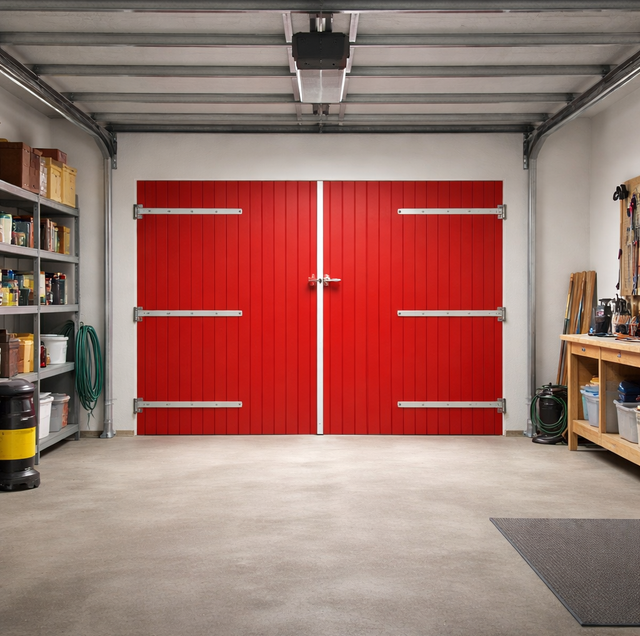
You pull the door down at seven in the morning, and by the time you go back out for a cooler or a bike at six that evening, the air inside hits you like a wall. The door has been closed the entire day. No sunlight was pouring in, no wind was blowing hot air through an open gap, and yet the garage is easily 20 degrees hotter than the driveway outside it. It feels like the door should have been doing its job simply by staying shut. Instead, the closed door is often the single biggest reason the space is that hot in the first place.
A garage door isn't a wall. It's a large panel of thin material, usually steel, sitting directly in the sun for hours, and what that panel is made of, more than whether it's open or closed, decides how much of that heat actually ends up inside.
Why Does an Uninsulated Steel Door Radiate So Much Heat Inward?
A standard, non-insulated steel garage door is a single skin of metal roughly 24 to 27 gauge thick, sometimes with a few horizontal ribs stamped in for rigidity, but nothing between the outside face and the inside face except air. Steel has very little mass to store heat and very high conductivity, so the two properties work against you at the same time. Direct sun hits the outside face, and the surface temperature climbs fast, often 40 to 60 degrees above the day's air temperature on a dark-colored door facing full afternoon sun. Because there's so little material and so little resistance between that hot outside face and the inside face just a few millimeters away, the heat conducts straight through in a matter of minutes rather than being slowed or absorbed along the way.
Once that inside face is hot, it doesn't just warm the air touching it. It radiates infrared heat outward into the garage the same way a cast-iron skillet radiates heat toward your hand even before you touch the pan itself. Every square foot of that door becomes a low-grade radiant heater pointed straight into the space, and it stays that way as long as the sun is on the outside face, which for a west- or south-facing door can mean five or six hours running into the hottest part of the afternoon.
Why Doesn't Just Closing the Door Stop It?
Closing the door blocks direct sunlight and keeps wind-driven heat from blowing straight in, and that matters, but it does nothing to stop the conduction and radiant transfer described above. The door doesn't need to be open for heat to move through solid steel. If anything, a closed door with no other ventilation traps the heat that door is putting off, because there's nowhere for that warmed air to go once it's inside.
A garage with the door shut and no powered exhaust or cross breeze behaves like a sealed metal box: hot air rises and stacks near the ceiling, the concrete slab below slowly absorbs heat all day and keeps releasing it well after sunset, and the radiant door continues adding to the load until the sun moves off it. None of that requires an open gap. The seal doing its job: a door with a tight bottom seal and snug weatherstripping is, ironically, better at holding that trapped heat in than a door with a few gaps letting some of it vent back out, which is part of why a newer, better-sealed door can sometimes feel hotter inside than an old, drafty one on the same afternoon.
What an Insulated Core Changes About the Heat Path
An insulated garage door isn't the same steel panel with a coat of paint. It's two thin steel skins with a rigid foam core sandwiched between them, and that core is what interrupts the conduction path described above. Instead of heat moving straight through a few millimeters of solid metal, it has to cross an inch or two of foam that resists that transfer, which is what an R-value number is actually measuring: how much the material slows heat flow, not how much it blocks light or sound.
Two core materials show up on nearly every insulated door, and they don't perform the same way even at a similar thickness.
| Core type | How it's installed | Typical R-value | What it changes beyond R-value |
|---|---|---|---|
| Polystyrene (rigid foam board) | Pre-cut panels friction-fit or glued between the two steel skins | Roughly R-4 to R-9 depending on thickness | Leaves small air gaps at the panel edges and stiles where the foam board doesn't fully contact the steel |
| Polyurethane (foamed-in-place) | Liquid foam injected and expanded to bond directly to both steel skins | Roughly R-12 to R-18 for a comparable door | Fills the cavity completely, including corners and joints, and bonds to both skins, which also stiffens the panel and reduces the drum-like reverberation of an empty steel door |
The bonded fill matters as much as the R-number on the spec sheet. A polystyrene-cored door still has small pockets of trapped air around the board's edges where heat can move by convection instead of being resisted by the foam, while a foamed-in-place polyurethane core leaves essentially no path for air to migrate inside the panel itself. That's why two doors with similar published R-values can still feel different in practice: the one with the tighter, fully bonded core is doing more to actually stop heat, not just slow it down on paper.
None of this replaces a tight bottom seal, side seals, or a header seal. An insulated panel with a gap at the bottom or a cracked jamb seal is still letting heated outside air leak in around the edges no matter how good the foam core is in the middle of the panel.
What Else Besides the Door Drives Garage Heat?
The door is usually the biggest single source, but it isn't the only one, and a garage can stay hot even after the door gets upgraded if these are ignored.
Attic heat radiating down: if the garage ceiling backs directly onto an attic space, that attic can reach 130 to 150 degrees on a sunny afternoon, and an uninsulated or thinly insulated ceiling lets a meaningful share of that heat radiate straight down into the garage below, the same conduction-and-radiate mechanism as the door, just overhead instead of on the wall.
Weatherstrip and frame gaps: worn bottom seals, gapped side jambs, and header seals that have hardened or shifted let hot outside air seep in around the door's edges even when the panel itself is well insulated, adding a steady trickle of heated air the insulation alone can't stop.
Vents, or the lack of them: a garage with no intake or exhaust path has nowhere for the heat generated inside, from the door, the ceiling, and the slab, to escape once the sun goes down, so it stays warmer overnight than a garage with even passive cross ventilation, and the next day's heat load starts stacking on top of air that never fully cooled.
Moving the Trapped Air Out Changes the Math
Insulating the door slows how much heat gets in through the panel itself, but it does nothing for the hot air already stacked under the ceiling from a full day of radiant load off the door, the slab, and an uncooled attic above. That stacked air is a convection problem, not a conduction problem, and foam core and tighter seals don't move it; they only slow what's still crossing the panel.
A powered exhaust fan, whether a wall-mounted unit set high on the wall or a vented fan tied into the attic space above the garage, works by giving that stacked heat somewhere to go and pulling in relatively cooler air from a low vent or a cracked door to replace it. The right fan size depends on the garage's square footage and ceiling height, a detail worth confirming with an electrician or HVAC contractor for the specific space rather than guessing at, but even a modest unit run during the hottest few hours of the afternoon makes a real difference, because it's solving the one problem an insulated panel and a tight seal cannot: air that's already hot and has nowhere to escape.
Cross-ventilation, at a smaller scale: cracking the door a few inches, or opening a side service door on the opposite wall, for twenty or thirty minutes during a cooler stretch of the day gives that stacked heat a path out before it plateaus for the afternoon. That's a supervised, short-window habit rather than a way to leave a garage open unattended, and it works best paired with a fan actively pulling air through the space rather than left to drift out on its own.
The Same Mechanism Works in Reverse Come Winter
The framing above is a summer scenario, but the physics runs both directions, and it's worth keeping that in view rather than treating this as a hot-weather-only issue. The same insulated core and tight seal that slow heat from moving in during a 100-degree afternoon also slow heat from moving out during a hard freeze. A garage that holds summer heat poorly is, by the same mechanism, a garage that loses winter heat quickly, which matters for anyone storing paint, batteries, or other freeze-sensitive items out there, or running a water line or hose bib through that space. An uninsulated door with a leaky seal is a year-round liability, not just a July problem.
Heat Doesn't Just Make the Garage Uncomfortable
The radiant load described above also stresses the door's hardware over time, not just the air temperature. Sustained high surface temperatures and UV exposure cause a steel panel to expand and contract on a daily cycle, and repeated cycling like that, especially on a dark, unshaded door, can gradually bow or warp a thin steel panel over several years. A warped panel changes how evenly the door's weight loads onto the torsion springs and how smoothly it travels through the tracks, which adds strain to both the springs and the opener motor that wasn't part of the original design load. Heat isn't just a comfort problem sitting on top of the door; it's a slow mechanical one working on the hardware behind it.
Frequently Asked Questions
Yes. A dark-colored steel door can run 20 to 30 degrees hotter on its surface than a light or white door under the same afternoon sun, because darker pigments absorb more of the visible and near-infrared spectrum instead of reflecting it. Color alone won't fix the underlying conduction issue, but it does reduce how much heat the panel has to shed in the first place.
Most closed, uninsulated garages plateau within one to two hours of the door getting full sun exposure, once the radiant output from the door, the slab, and the ceiling balances out against what little heat escapes through gaps and vents. That plateau temperature can run 20 to 25 degrees above the day's outdoor high, which is why the garage often feels hotter at 4 p.m. than it does standing outside in direct sun.
The door alone typically accounts for a large share of the heat load because it's thin, uninsulated steel taking direct sun for hours, but if the garage ceiling backs onto an uninsulated attic, that attic can reach well above the outdoor air temperature by mid-afternoon and radiates down through drywall the same way the door radiates inward. A quick way to tell which source is dominant without opening anything up: feel the ceiling drywall and the inside door panel at the same time in the late afternoon. Whichever one is noticeably hotter to the touch is contributing more heat right now, and that's the one worth insulating first if you're tackling them one at a time.
It can. A foamed polyurethane-cored door weighs noticeably more per square foot than a hollow steel panel, so the torsion spring's wind count and wire size need to be matched to the new door weight, and an opener's travel limits and force settings may need to be reprogrammed after the swap. A spring or opener sized for the old, lighter door won't lift the new one correctly.
Not much. The small integrated louvers found on a handful of door models are sized for basic airflow and moisture relief, not heat exhaust, and they move a small enough volume of air that they don't meaningfully lower the trapped heat in a closed garage. A powered exhaust fan or a properly vented gable does far more.
No. A radiant barrier reflects infrared heat away from a surface rather than resisting heat flow through the material the way foam insulation does, and it only works well when there's an air gap on the side facing the heat source. It can complement an insulated core, but a foil layer glued directly against a steel skin with no air space behind it does very little on its own.
A garage that bakes all day with the door shut isn't a sign anything is broken. It's a sign the door is doing exactly what an uninsulated steel panel does in direct sun: absorbing heat on one face and putting it right back out on the other. Once you know that's the mechanism, the fix stops being a mystery and becomes a simple question of what's stopping that transfer, and what still isn't.
Ask what the door itself is adding to the heat load — Squared Away Garage Door Service will compare R-values across insulated garage doors, reseal the panels you already have, or quote a full door replacement in Pflugerville when retrofitting no longer pays. Call (512) 456-3781.
