

How to Match a New Garage Door to Your Home's Style, Not a Trend
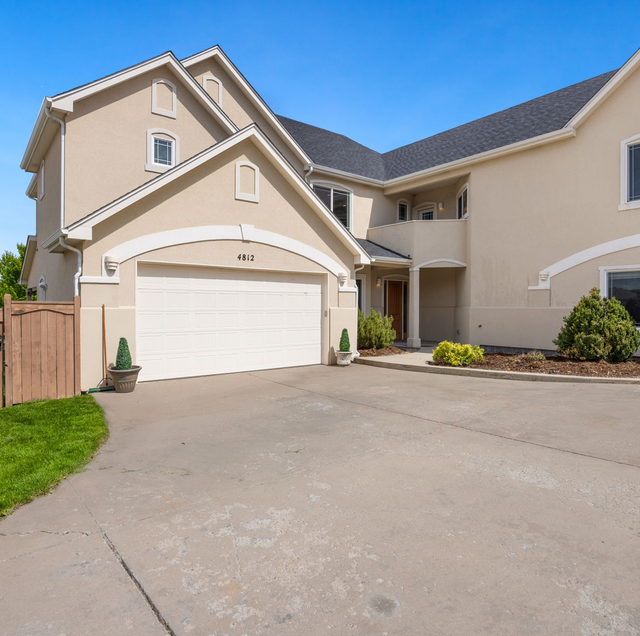
The assumption sounds harmless enough: any door style works with any house, so the choice comes down to which photo in the gallery you like best. A carriage-style door with black strap hinges looks handsome online, a flush steel panel looks clean and current, and either one gets picked the way a paint chip gets picked, on its own merits, held up against nothing but personal taste.
That assumption is where mismatched garage doors come from. A door is not a freestanding object judged on its own; it is the single largest moving panel on most home facades, usually 16 to 18 feet wide on a double bay, and it gets read by the eye alongside the roofline, the window trim, the siding, and the stone or brick already on the house. Panel style, window placement, color, and hardware do not just decide whether the door looks good. They decide whether the door looks like it belongs to the house or like it was ordered from a catalog without anyone checking what was already there.
The Door Reads as Part of the Facade, Not a Stand-Alone Object
A house facade works because its parts share a small set of visual rules: how symmetrical it is, how ornamented the trim is, what the window shapes are, and how many materials are doing the talking. A colonial facade is symmetrical and restrained. A rustic stone-and-timber home mixes a heavy, textured material with exposed wood and expects some visual weight from every element. A contemporary build strips ornament down to clean horizontal or vertical lines and lets material contrast, not applied detail, do the work.
A garage door either follows that same rule set or it breaks it, and because the door is usually the largest flat plane on the front elevation, a break shows up immediately, even to someone who could not name a single architectural term. The mechanism is simple: the eye compares new elements to established ones automatically, and a mismatch in panel detail, window shape, or hardware style reads as a mistake before it reads as a design choice.
Panel Profile Sets the Baseline Style Signal
Panel profile is the first and biggest signal a garage door sends, before color or hardware ever enters the conversation.
Raised panel: a recessed rectangular panel design, often stacked long panels or a short-and-long combination, that has read as traditional since long before garage doors were mass-produced. It pairs naturally with colonial, traditional, and most builder-standard suburban facades where the windows and trim already carry a formal, symmetrical rhythm.
Flush panel: a flat, unadorned steel or aluminum face with minimal or no raised detail. It reads clean and current, and it is the profile that keeps a contemporary or modern facade looking intentional instead of having a traditional-shaped door sitting awkwardly under a flat-roofed, glass-heavy house.
Carriage-house overlay: a standard steel or composite door base with decorative wood or composite overlay boards, battens, and applied strap hinges bolted to the surface to mimic the look of an old swing-open carriage door, even though the door still runs on a normal track and torsion-spring system underneath. This profile is the one most often chosen for farmhouse and rustic stone-and-timber homes, since the board-and-batten detailing echoes timber accents and exposed beams already on the house.
Full-view aluminum and glass: an anodized or powder-coated aluminum frame holding full glass panels edge to edge, no steel skin at all. It is the clearest of the four style signals, suited most naturally to modern and contemporary facades built around large expanses of window glass, since it repeats a material the house already uses rather than introducing a new one.
Choosing a panel profile against the house rather than against a showroom photo is the single decision that prevents most of the mismatches homeowners end up living with.
Window Placement and Shape Either Echo the House or Fight It
Window inserts do more design work than most buyers expect, because a house's existing window shapes set a visual vocabulary the door either speaks or ignores. A colonial with arch-top windows over the front door gets a genuine, if smaller, payoff from an arched window row on the garage door. A farmhouse with small, evenly spaced panes on its windows reads better with a simple grid of square or rectangular lites than with a single sweeping arch. A modern build running full-height, minimal-frame glass expects a clerestory row, a narrow horizontal band near the top of the door, rather than anything ornamental.
Placement matters as much as shape. Windows set high, near the top of the door, keep the visual weight of the opening up where a home's actual windows usually sit, which reads as intentional. Windows set low or centered across the whole door draw the eye down to garage height and tend to make the opening look larger and heavier than it is, a mismatch that shows up on facades where every other window sits well above eye level.
Color and Finish Follow the Trim Logic Already on the House
The house has already made a color decision before the door order goes in: trim in one tone, siding or stone in another, and usually a third accent color on the front door or shutters. A garage door color choice succeeds or fails based on which of those three roles it plays, not on whether the color looks good in isolation.
Matching the door to the trim color, rather than the siding, is the choice that reads as coordinated on most facades, because trim already frames every window and the front entry, and the garage door is functioning as one more large, framed opening. A door painted to match the siding instead tends to visually merge with the wall and shrink, which can work on a monochrome modern build but reads as an afterthought on a house with any texture contrast between siding and stone.
Finish matters as much as hue. Factory-baked enamel finishes with UV-stable pigment resist fading and chalking far better over years of direct sun exposure than a field-applied paint job, which is a real, measurable difference on any door getting full sun for part of the day. A wood-tone composite overlay, meanwhile, is a coherent choice specifically where real wood, timber beams, cedar posts, or a stained front door already exists on the house; introducing a wood-tone door onto an all-brick colonial with painted white trim adds a fourth material the facade was never built to carry.
Hardware Carries More Design Weight Than Its Size Suggests
Decorative hardware, strap hinges, handles, and clavos (the round, nail-head-style studs used on carriage-style overlays) are small relative to the door itself, but they are also the detail closest to eye level, and the one a visitor's hand actually reaches for, so it gets noticed out of proportion to its size. Most of it is decorative rather than structural: on a modern carriage-style overlay door, the strap hinges and handles are bolted to the surface, while the door's real hinges and the torsion spring system that lifts the whole assembly do the structural work out of sight.
Hardware finish needs to answer to the same humidity that promotes rust on any exposed steel around a garage, springs, cables, hinges, and hardware alike, which is why a powder-coated or stainless finish holds its look longer than plain painted steel left facing the weather. Scale matters too: oversized hinges and handles on a narrow single-car door look like a costume accessory, the visual equivalent of a heavy eyeglass frame worn on a face too small for it, while hardware sized modestly relative to the door's actual width reads as original equipment rather than an add-on.
Matching Door Elements to Common Home Styles
| Home Style | Panel Profile | Windows | Color/Finish | Hardware |
|---|---|---|---|---|
| Modern/contemporary | Flush, minimal detail | Clerestory row, high and narrow | Monochrome, matched to window frames | Minimal or none |
| Traditional colonial | Long raised panels, symmetrical | Arch-top or rectangular, evenly spaced | Trim-matched, factory enamel | Modest strap hinges, brass or bronze tone |
| Rustic stone-and-timber | Carriage-house overlay | Square or grid lites | Wood-tone composite or dark trim-matched | Substantial strap hinges, clavos |
| Farmhouse | Carriage-house overlay, board-and-batten detail | Small grid lites | Black or white, high-contrast finish | Black strap hinges, X-brace overlay |
Proportion and Scale: Why the Same Door Looks Different on Two Houses
The same door, same panel profile, same color, same windows, can look correct on one house and oversized on another, because proportion is relative to the facade around it, not a fixed property of the door itself. A wide double door under a low roofline with modest trim reads as dominant and heavy. The identical door under a taller two-story facade with generous trim depth reads as balanced, because the surrounding elements have enough visual weight to carry it.
Street sightlines matter more than driveway sightlines, since the street view is the one most people, including a future buyer, actually see. A raised-panel detail that reads crisp up close can flatten into a plain rectangle from thirty feet away if the recess depth is too shallow, while a bolder carriage-house overlay with deeper shadow lines holds its detail at a distance. Matching a door to a house is a proportion exercise as much as a style exercise: the right profile at the wrong scale still looks wrong, and the wrong profile at the right scale can still look like an unforced error.
Frequently Asked Questions
Not exactly, but the family needs to match. True divided-lite glass (real individual panes set in a grid frame) and simulated divided lite (a single glass pane with a grille insert clipped or bonded over it) both come in arch-top, rectangular, and clerestory layouts across most manufacturers, so the choice is closer to picking a matching relative than an identical twin. True divided lite adds real weight in individual small panes, while simulated lite uses one lighter pane, a difference worth asking about if the door already runs a heavier overlay.
Often, yes, through bolt-on or magnetic strap hinge and handle kits designed for existing steel doors. The trade-off is weight: a few pounds of added hardware per panel section changes the door's total lift weight, and torsion springs are sized in matched pairs to a specific weight range, so a retrofit hardware kit on a door already near the top of its spring's rated capacity can call for a spring recalibration rather than a straight bolt-on job.
Generally yes, on any finish that isn't UV-stabilized, and the reason is a matter of physics rather than paint quality alone: darker pigments absorb a wider band of ultraviolet and infrared wavelengths than lighter ones reflect, and that absorbed energy is what drives the chemical breakdown of the coating's resin over years of exposure. In practice, a dark bronze or black door on a west-facing driveway will show chalking, and color drift measurably sooner than the same finish line in a tan or almond tone on an identical door.
No. It reads most naturally on modern and contemporary builds, but a full-view door framed in black steel-look mullions that echo the trim color already on the windows can also work on transitional or industrial-farmhouse facades, particularly where the house already mixes metal accents with wood siding. It reads poorly mainly where the rest of the house is heavily ornamented and traditional, since the minimal frame has nothing to visually agree with.
Usually, yes. Because strap hinges, handles, and clavos are separate pieces bolted to the panel rather than molded into it, a single damaged or corroded piece can typically be unbolted and replaced or refinished on its own, without touching the panel underneath. The one thing to check first is the fastener pattern: some manufacturers use a proprietary bolt spacing for their overlay hardware, so a swap-in piece from a different brand's line does not always line up with the existing holes.
They do, in two ways worth knowing before the order goes in. An insulated door's stated R-value describes the solid sections; every glass insert is a break in that insulated core, so a door with a full row of windows does less to hold temperature in the garage than the same model without them. Glazing choice also matters on the security side: single-pane acrylic and tempered glass behave differently under impact, and obscure or frosted glazing keeps the garage's contents out of view from the street while still passing daylight through.
Read the House Before You Order the Door
Personal taste still drives the decision. It just works best inside the constraints the house has already set, the same rhythm of symmetry or asymmetry, the same window shapes, the same materials already on the walls, rather than against them. A door chosen against the facade instead of with it is the one that still looks slightly wrong five years later, no matter how many times it gets repainted.
Not sure which panel profile, window layout, or finish actually fits your home's facade — get it looked at before you order. Squared Away Garage Door Service serves Cedar Park and Central Texas. Call (512) 456-3781.
