

Gaps Under a Garage Door: The Real Reason Bugs and Water Get In
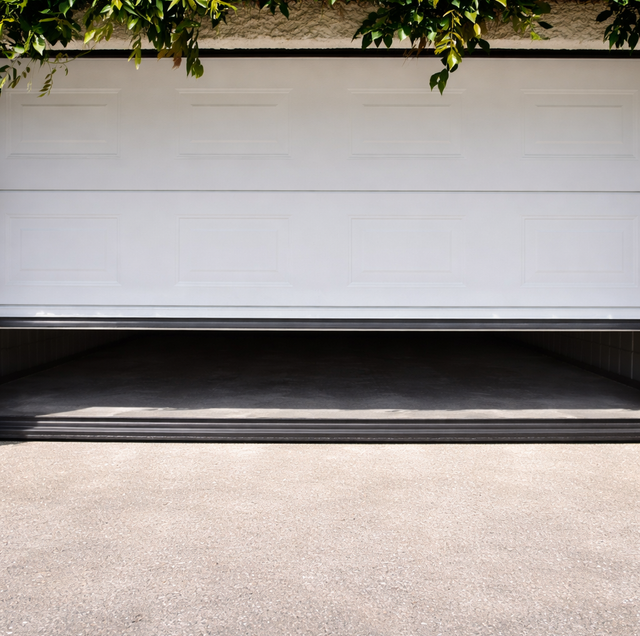
A line of ants crossing the concrete on a morning nobody has opened the garage in a week. A dark, damp stripe fanning out from the bottom edge after a hard rain. The door itself looks fine: it opens and closes on command, the panels are straight, nothing is dented. So the assumption most people make is that a newer, good-looking door is sealed, and if something is getting in underneath it, it must be a one-off. That assumption is wrong, and it's why so many gaps go unaddressed until the ant trail turns into a rodent nest or the damp stripe turns into a soft, swelling baseboard.
A garage door's ability to keep water and pests out has almost nothing to do with how new or attractive the door itself is. It comes down to a strip of rubber at the bottom of the door, an aluminum track holding that rubber in place, and how well the whole assembly still presses against the slab underneath it. That system wears, shifts, and loses contact over time even on a door that otherwise looks brand new, and once it does, the gap it leaves behaves the same whether the door is five years old or fifteen.
What the Bottom Seal Is Actually Supposed to Do
Most homeowners picture the bottom seal as a strip of rubber that blocks the gap the way a doorstop blocks a draft. That is not quite how it functions. The seal, sometimes called an astragal, is a flexible profile, usually a T-style or bulb shape, that sits inside an aluminum retainer track screwed to the bottom of the door panel. When the door closes, the weight of the panel presses the rubber down against the concrete slab and compresses it slightly; the compressed rubber flexes into the low points and minor irregularities of the floor to close the gap.
Compression, not just contact: a seal that merely touches the slab without any real pressure behind it will not close a gap. The rubber has to deform against the surface to shed water and block the smaller openings pests use, and that only happens when the door's own weight is loading it evenly along its full width.
That single design detail explains why a gap can appear even when nothing about the door looks broken. If the rubber has lost its flexibility, if the track holding it has shifted, or if the slab it presses against is no longer level with the rest of the opening, the compression stops happening evenly, and daylight, water, and insects find the path of least resistance.
Why the Rubber Fails Long Before Anyone Notices
Rubber and vinyl bottom seals are wear items, not permanent hardware, and heat is the main reason they fail. Intense sun and UV exposure on the driveway-facing edge of a garage door bakes the seal every afternoon it is closed, and that steady heat cycle dries out the plasticizers that keep the rubber pliable. The seal gradually hardens, cracks along its compressed edge, and eventually loses the flexibility that let it conform to the slab in the first place. A hardened seal can look intact from a few feet away and still fail to compress against anything.
Cold makes the same rubber brittle in the opposite direction, so a seal that survives one blazing summer can still crack on a hard freeze the following winter. The stress runs both ways across the year, not just during the hottest stretch, which is why a seal replaced only in response to a summer problem often needs attention again once the temperature swings the other direction.
Storms add a second failure path. Wind-driven hail and debris can dent the bottom panel rail that holds the retainer track, and even a shallow dent is enough to twist the track a few degrees out of true. Once the track is no longer straight, the rubber inside it stops compressing evenly across the full width of the door, leaving a gap at one end even though the seal itself might still be in decent shape.
When the Slab Moves, the Seal Can't Follow It
A bottom seal is only as good as the surface it presses against, and that surface is not as fixed as it looks. Concrete slabs sit on soil, and soil that swells and shrinks with moisture, commonly expansive clay soil, pushes and settles unevenly under a slab across the seasons. A slab does not need to crack for this to matter: a rise or dip of a fraction of an inch at the threshold is enough to leave a section of the seal hovering a hair above the concrete instead of resting against it, and a hair of clearance is all water and small insects need.
This kind of gap tends to show up gradually and unevenly, wider at one corner than the other, because soil movement rarely lifts or drops a slab in a perfectly uniform way. It is also easy to miss because the door itself did not change. Homeowners troubleshoot the seal, replace it, and are confused when the new rubber closes the gap for a while and then slowly opens back up. The seal was never the root problem; the slab moved out from under it, and no amount of rubber compensates for that on its own once the movement is significant enough.
Warped Panels and Worn-Out Vertical Seals
The bottom seal gets most of the attention, but it is not the only place a gap opens. The bottom panel itself can bow or warp, particularly on steel doors with thin-gauge panels that spend years absorbing direct sun. Heat expands the exposed face of the panel faster than the shaded interior side, and repeated cycles of that uneven expansion can leave a slight bow across the bottom rail. A bowed rail no longer sits flat against the retainer track, so even a healthy seal cannot compress consistently across the full width.
Vertical gaps get less attention but matter just as much. Side, or jamb, seals run up the door frame, and a header seal runs across the top, and all three work the same compression principle as the bottom seal. A worn jamb seal, or a door that has drifted slightly out of square in its tracks, opens a vertical sliver along one or both sides. That sliver is often the one homeowners never think to check, because the visible symptom, an ant trail or a puddle, shows up on the floor near the bottom seal even when the actual entry point is several feet up the side.
Water and Bugs Follow the Same Gap, But Not the Same Path
Water intrusion and pest entry share a starting point, an unsealed edge, but they behave differently once they are through it. That difference is worth understanding because it changes what "sealed enough" actually means.
| Factor | Water intrusion | Pest entry |
|---|---|---|
| Minimum gap needed | Any gap with the slab sloped toward the garage, or standing water at the threshold | A gap of roughly a quarter inch or less can admit ants and other small insects; slightly larger gaps let in mice |
| When it's worst | During and after rain, especially wind-driven rain that pushes water sideways under the door | Year-round, though insects are most active in warm months and rodents seek shelter as temperatures drop |
| What makes it worse | Negative slab slope, a missing or failed threshold seal, clogged drainage at the driveway apron | Cracks in the seal rubber, gaps at panel joints, gaps around conduit or weep holes near the slab edge |
| Where it shows up | Damp stains, efflorescence, or standing water just inside the door | Trails, droppings, or nests along the base of the wall near the door |
A dedicated threshold seal, a separate strip of flexible material glued directly to the slab in front of the door, addresses the water side of this more directly than the bottom seal alone, because it also blocks the last quarter inch of clearance at the very base of the opening where wind-driven water tends to pool. Pests, on the other hand, do not need standing water or a slope to get through; they only need a consistent gap, so a seal that is technically watertight during a light rain can still be wide enough for insects to use every day.
Physically, think of the bottom seal like the gasket on a refrigerator door: it only keeps the cold in as long as it makes full, even contact around the whole opening, and a gasket that has gone stiff in one corner lets warm air leak there even while the rest of the door seals perfectly fine.
What Actually Fixes a Gap (Beyond Just Replacing the Strip)
A cracked or hardened seal is the easiest fix and the first thing worth checking, since swapping the rubber into a clean retainer track solves the problem when the track and slab underneath are still true. But a new seal on a twisted track, a bowed panel, or a slab that has shifted will only close the gap temporarily, if at all.
Track and panel condition: if the retainer track is dented or the bottom panel is visibly bowed, the seal needs a straight, flat surface to compress against before replacing it does any good.
Slab-to-track alignment: where soil movement has changed the slab height at the threshold, an adjustable threshold seal, or in more significant cases a professional evaluation of the opening itself, addresses the gap at its actual source rather than papering over it with more rubber.
Side and header seals: these wear on the same schedule as the bottom seal and are often skipped during a DIY fix, leaving a vertical gap that gets blamed on the bottom seal instead.
Frequently Asked Questions
Not usually. A seal that fails again within a year of replacement is a specific tell: it almost always means the retainer track was reused instead of replaced alongside it, or that whoever installed the new seal did not shim the track level first, so the new rubber inherited the same uneven compression that killed the old one. A technician re-leveling the track adds maybe fifteen minutes to the job and usually solves a repeat-failure pattern that a straight seal swap alone will not.
Run a thin flashlight beam along the full width of the bottom edge from outside with the door closed, then repeat with a sheet of paper: slide it under and pull. Where the paper drags, the seal is still compressing; where it pulls free, it is not. The pattern is what names the part. A gap that runs evenly across the whole width is the rubber itself. A gap that opens at one end and closes at the other is something the seal is sitting on, which narrows it to a bent retainer track, a bowed bottom rail, or a slab that has shifted. To separate those, squeeze the rubber at the bad end. Rubber that is still soft and springy while daylight shows through means the surface underneath dropped away from it, not that the seal wore out.
Panel insulation improves temperature control and can reduce the panel warping that heat cycling causes over time, but it does not seal gaps at the bottom, sides, or top of the door on its own; those still depend on the seal and track hardware being in good condition.
Because retainers are not all one shape. A single-channel aluminum retainer takes a T-style seal with one bead. A double-channel retainer, the more common one on newer steel doors, takes a U-shaped or bulb seal with two beads that feed into two separate grooves, and a single-bead seal simply will not hold in it. Older wood-frame doors often have no aluminum retainer at all, just a flat strip fastened to the bottom of the panel. Count the channels and measure across the retainer lip before buying anything, and when the new seal goes in, wet the beads with soapy water so they slide through instead of bunching and tearing partway across a sixteen-foot door.
Often, and it is worth separating from the slab-movement pattern described above, since both show up as a gap at one end. If one half of the opening catches more direct afternoon sun than the other, that half of the rubber bakes harder and stiffens first, losing its compression while the shaded half is still pliable. The rubber itself settles the question: hardened, chalky, or cracked at the bad end points to sun exposure, while rubber that is still soft at the bad end with daylight behind it points to the slab or the track moving out from under a seal that is otherwise fine.
Caulk applied where the slab meets the seal can help with a minor, uniform gap, but it is not a substitute for a functioning compression seal, and caulking over a bowed panel or a misaligned track just hides the underlying issue until it reopens.
A gap under a garage door rarely announces itself all at once. It starts as a stiffened corner of rubber or a fraction of an inch of slab movement, and it sits there quietly through a season or two before the ants, the mice, or the water ever find it. The seal is the part everyone thinks to replace. The retainer track it rides in and the slab it presses against are the parts that decide whether the replacement actually holds.
Have the gap traced to its real source instead of packing it with foam — a fix that lasts usually means weather seal replacement alongside a threshold and track check, which Squared Away Garage Door Service runs on Cedar Park jobs and Pflugerville garage door service calls alike. Call (512) 456-3781.
