

Hail Damage on Your Garage Door: Cosmetic or Functional?
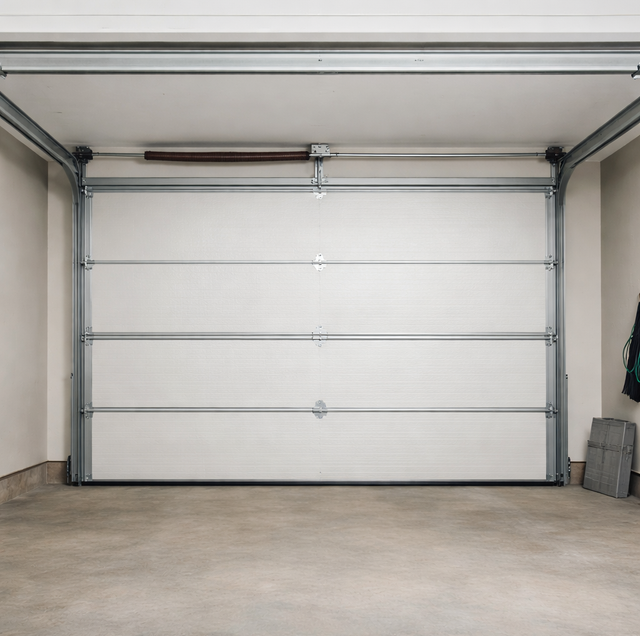
The storm passed through overnight, hail rattling the roof and the truck hood for a few loud minutes before it moved on. In the morning light, you walk out to find the garage door pocked with shallow dents, a scatter of small ones across the top two panels and one closer to the size of a golf ball near the seam. Your first reaction is probably about how it looks. Your second, more useful question is whether any of that changed how the door actually works, or whether what you're looking at is only skin deep.
That distinction matters more than it seems. A garage door panel is thin steel or aluminum wrapped around a frame, and a hard enough impact can do more than leave a mark: it can bend the panel's curve just enough to bind against the track, crack the reinforcement bonded to its back side, or knock loose something the panel is holding in position. None of that is visible from the driveway. The rest of this walks through what hail can actually reach inside a garage door system, section by section, starting with the part everyone assumes is fine because the door still opens.
Can Dents Actually Change How the Door Tracks?
A sectional garage door isn't a flat sheet; it's a series of panels hinged together, each one slightly curved so it rides smoothly through the bend where the vertical track meets the horizontal track near the ceiling. That curve is precise on purpose: the rollers at each panel's edge sit inside a track built to a specific width, usually with only a small margin, often around a quarter inch, on either side of the roller stem. A dent that's purely cosmetic sits in the flat field of the panel, away from the edges, and doesn't touch that geometry at all.
A dent near a panel's end stile or top and bottom rail is a different situation. Hail large enough to leave a real dimple, golf-ball size and up rather than the smaller pea- or quarter-size hail that mostly just chips paint, can push the panel's edge out of its original plane by a fraction of an inch. That's often enough to change how the roller stem sits in the track, especially through the curved section, where the roller is already working at an angle. The symptoms show up as a scrape or grinding sound at one specific point in the door's travel every time, a door that hesitates or stutters through the curve, or a roller that visibly rubs the inside edge of the track rather than rolling free. None of that is about how the dent looks. It's about whether the metal around the roller's edge still holds the shape the track was built to accept.
Can Hail Damage a Panel's Reinforcement Struts Even When the Dent Looks Minor?
Wider panels, especially on a double-wide door, usually carry a horizontal reinforcement strut bolted or riveted across the back, a piece of formed steel that stiffens the panel against wind load and keeps it from bowing in the middle when the door is under pressure. On some doors, particularly wind-rated or insulated models, the top panel's strut also anchors the opener's drive arm bracket.
A dent that looks minor from the front can still transmit enough force through the panel's skin to flex or crack the strut riveted to the back, especially if the impact lands directly over where the strut runs. A cracked or bent strut doesn't always change how the door looks when it's sitting closed. It shows up under load: the panel flexes more than it should when the door is opening or closing, a slight wave or ripple becomes visible across the panel's face as the door moves, or, on a door where the strut also carries the opener bracket, the top panel develops a new wobble right at the point where the arm connects. A technician checks this by running the door and watching each panel's face for flex through a full cycle, and by feeling for give when pressing on the panel near known impact points, not just by looking at the dent from outside.
Does Hail Ever Damage the Springs, Opener, or Sensors Indirectly?
Hail itself doesn't dent a torsion spring or crack an opener's logic board. Those parts sit inside the garage, above the door or mounted to the ceiling track, out of direct impact range. But the same storm that drops hail rarely arrives alone, and two indirect paths are worth checking.
The first is debris. Wind-driven hail often comes with branches, loose shingle grit, or gutter debris, and any of that can get flung against an opener's exposed safety sensors, the small photo-eye units mounted a few inches off the floor on either side of the track. A direct hit can crack a lens, knock a sensor out of alignment by even a degree or two, or snap the bracket holding it. Because the sensors have to see each other in an unbroken beam to let the door close, a knocked sensor shows up immediately: the door reverses partway down, refuses to close at all, or the indicator light on one eye goes from solid to blinking.
The second path is electrical. A hailstorm severe enough to cause panel damage is often paired with lightning and grid-level voltage spikes as power is interrupted and restored. That surge travels through household wiring and can reach the opener's control board the same way it would during any storm, unrelated to the hail itself, showing up as a dead unit, a motor that hums without moving, or a remote that suddenly stops working. If a door won't open or close after a hail event, it's worth separating what the hail actually touched (the panels, and possibly a sensor a piece of debris struck) from what the storm's electrical side touched (the opener), because those are different repairs with different fixes.
When Is Hail Damage Purely Cosmetic, and When Is It a Real Functional Problem?
Not every dent needs a second look, and the difference usually comes down to size, location, and depth rather than how many dents there are.
| What you're seeing | What it usually means | What to do |
|---|---|---|
| Small, shallow dents scattered across the flat middle of a panel | Cosmetic only; paint may be chipped, but the panel's structure is unaffected | Note it for insurance documentation; no functional repair needed |
| A dent near a panel's edge, seam, or end stile | Possible change to how the roller or hinge sits, even if the door still runs | Have the track alignment and roller fit checked before it wears further |
| A deep dent (golf-ball size or larger) directly over where a reinforcement strut runs | Possible strut flex or crack under load | Have a technician check panel flex through a full open/close cycle |
| Scraping, grinding, or a hesitation at the same point in every cycle | The track and a dented edge are now in conflict | Stop cycling the door and have it inspected before the roller or track wears further |
| A sensor showing a blinking or solid light after the storm; door won't close | Debris strike or surge, not the panels themselves | Check for a cracked lens or misaligned bracket, and rule out a surge-related fault separately |
A door that still opens and closes smoothly after a hailstorm, with dents confined to the flat field of the panels, is very often fine mechanically even though it looks rough. A door that hesitates, scrapes, or shows visible flex through its cycle has moved past cosmetic, whether or not the dent that caused it looked severe from the driveway.
What to Check in the First Few Days After a Hailstorm
Before any repair decision, run the door through a couple of full cycles with the lights on and actually watch it, not just listen for it to reach the top or bottom. Look at each panel's face for flex or rippling, listen for a new scrape or grind at a specific point in the travel, and check both sensor lights for a steady color rather than blinking. Photograph every dent, including size and location, while the storm date is fresh. That documentation, paired with a written assessment separating cosmetic dents from anything affecting the panel's structure or the door's track fit, is what an adjuster typically wants before approving repair or replacement, and it's worth having on file before the dents get harder to date.
When a Single Panel Can Be Replaced Instead of the Whole Door
Once the inspection separates cosmetic from functional damage, the next practical question is what actually gets fixed: one panel, or the whole door. Sectional doors are built section by section for exactly this reason. If the door's make, panel profile, and color are still in production, a technician can usually order a single matching section and swap out just the damaged panel, leaving the rest of the door, its opener, and its hardware untouched. That option works cleanly when the damage is confined to one or two panels, especially ones that sit away from the header and don't share a hinge point with an undamaged section.
That option narrows as the damage spreads. A storm that dents three or more panels across the run, or that reaches a panel where the strut has cracked and an adjacent one where a hinge or roller took real damage, means more of the door's structure is compromised than a single-section swap addresses well. Age factors in too: a door already years into its panel finish fading, or paired with an opener nearing the end of its own service life, is a different situation than a two-year-old door with one bad section. And if the panel profile or color has changed since the original install, even a well-matched replacement section can leave a visible seam in finish or texture next to the older panels, something worth asking about before ordering just one.
That call gets made during the same inspection, not on a second visit: how many panels are truly affected, whether the track and hardware came through clean, and whether a matching section is realistically available for that specific door.
Frequently Asked Questions
A hailstorm usually hits the upper panels hardest, since they take the most direct angle of impact and often sit closest to where wind-driven hail is moving fastest. But a garage door's panels are hinged together into a single connected assembly, so a warped edge on just one panel can pull the hinge point next to it slightly out of true, which then changes how the adjoining panel enters the track. That's why a technician checks the whole run of panels and hinges after a hailstorm, not just the ones with visible dents.
Not on its own in most cases. Door balance is set by the torsion spring's tension matching the door's total weight, and a handful of dents rarely changes that weight enough to matter. Dents can indirectly affect balance if a bent edge causes the door to bind or drag against the track partway through its travel, which puts uneven strain on the spring and cables even though the spring itself is undamaged.
Steel panels, typically 24- or 25-gauge, resist denting better than aluminum but transmit more force to whatever is behind them, which is part of why a strut crack is more common on a hard steel hit than a bent strut on a lighter aluminum panel that absorbs the impact by deforming further. Aluminum dents more easily and more visibly, but a given aluminum dent is less likely to have pushed force through to the strut or roller edge than a steel dent of the same size.
Yes, for a different reason than function: chipped paint on steel exposes bare metal, and in a humid climate that spot can start developing surface rust within weeks if it isn't touched up. It won't affect how the door tracks, but it's worth a small paint repair before rust has a chance to work under the coating around the chip.
It varies with how often the door cycles, but a garage used as the main entry to the house, with a dozen or more cycles a day, can go from a minor scrape at one point in the travel to a roller riding visibly against the track's edge within a few weeks, because every cycle wears the contact point a little further. A garage door used only occasionally can carry the same misalignment for months before it's noticeable.
A bind at one point in the track doesn't just wear the roller there faster; it pulls the cable and drum on that same side unevenly every time the door cycles, which is how a simple realignment turns into a cable or drum replacement if it runs another week or two on a busy household door. That escalation risk, not the dent itself, is the real reason to stop cycling a door that's scraping, grinding, hesitating at the same spot, or showing an unsolid sensor light, and use a side entry until it's inspected. A door with only cosmetic dents and a smooth, quiet cycle carries none of that escalation risk and is fine to keep using normally in the meantime.
A hailstorm is a single event, but the softening it can leave in a panel's edge or strut doesn't always announce itself the same day. A door that runs fine the week after can start scraping a month later once the smaller misalignment finishes wearing into the roller or track. Checking now, while the impact points are fresh and on record, is what turns a guess into an answer.
Schedule a post-storm inspection — a technician can check panel flex, roller and track fit, and sensor alignment, and document what's cosmetic versus functional for an insurance claim. Where one section took the worst of the hail, single-panel replacement keeps the rest of the door untouched, and the same post-hail check is available to homeowners across Georgetown. Squared Away Garage Door Service serves Cedar Park and Central Texas. Call (512) 456-3781.
