

10,000 vs. 25,000-Cycle Garage Door Springs: Who Should Upgrade
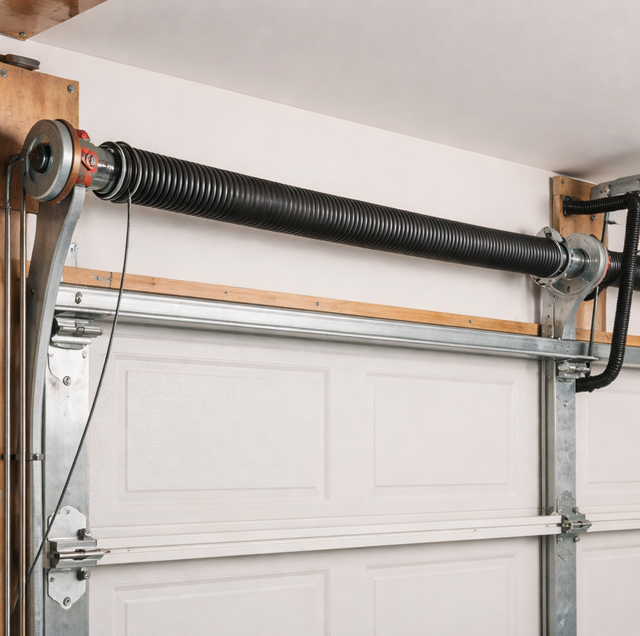
Two torsion springs built for the same door can sit side by side on a parts rack and still be rated 15,000 cycles apart. Pick both up, and the difference lands in your hands: the high-cycle one is longer, thicker through the wire, and heavier. That extra steel is not there to lift more weight. It is there so the steel that already does the lifting works at a lower stress on every trip the door makes.
A cycle rating is a fatigue number, not a strength number, and the gap between 10,000 and 25,000 is bought with specific, measurable changes to the coil.
What a Cycle Rating Is Measuring
One cycle is one full open plus one full close. Not a half trip, not a nudge from the remote to clear a bumper.
The rating is a fatigue-test figure: how many times that particular combination of wire size, coil count, and inside diameter can wind to its design number of turns and unwind again before the steel is expected to crack. Two conditions are built into the number. The spring has to be sized to the door's real weight, and it has to be wound to the turns it was designed for, not past them. Miss either and the stamped number no longer describes the spring over your opening.
The rating is also per spring, not per door. A pair of 10,000-cycle springs on one shaft is still a 10,000-cycle counterbalance. Sharing the load lowers what each carries, which is why a pair gets specified and replaced as a pair, but the ratings do not add together.
The Job the Spring Cannot Negotiate
Door weight fixes the torque: the counterbalance has to return almost exactly the door's weight through the cable drums, so the torque the spring must deliver is set by what the door weighs. A two-car sectional commonly lands in the low hundreds of pounds and climbs from there with insulation, glass sections, overlays, or solid wood.
Door height and drum size fix the turns: winding is not a feel decision. The spring gets wound the turns needed to pay cable off the drum across the door's travel, commonly around seven and a half on a standard seven-foot door with standard lift drums.
So every candidate spring for that door has to hit the same torque at the same number of turns. The opener does not change that; it is a positioning motor sized to move an already balanced door, not to haul a few hundred pounds.
What Actually Buys the Extra Cycles
With torque and turns both pinned, only a few dimensions are left to move, and they have to move together.
Wire diameter: the lever that does the real work. At a given torque, peak bending stress in the wire falls off with roughly the cube of the wire's diameter, and fatigue life climbs steeply as stress comes down. Torsion wire is drawn in increments sometimes only a few thousandths of an inch apart, precisely because those steps move stress so much. Step the wire up by about a tenth of its diameter and roughly a quarter of the stress comes out of the steel at the same torque.
Coil count and overall length: thicker wire is also far stiffer. Torque per turn climbs with roughly the fourth power of wire diameter, so that same modest step up delivers about half again as much torque for every turn of wind. Wound to the door's required turns, it would over-spring the door badly. Adding coils, which means a physically longer spring, walks the torque per turn back down to where the door needs it. That is why a high-cycle spring for the same door is visibly longer, not just fatter.
Inside diameter: the other way to soften a heavier wire is to coil it around a larger core. Residential torsion springs commonly run 1-3/4, 2, or 2-1/4 inch inside diameters, and stepping the ID up lets a larger wire reach the required torque per turn without running as long.
Wire type and surface finish: oil-tempered steel is the residential default. Galvanized wire holds off rust better but generally does not match oil-tempered fatigue strength at the same size, so a galvanized spring often has to be built heavier for the same rating. Some manufacturers shot-peen their higher-cycle springs, leaving the surface in compression so cracks start more slowly. Finish matters because fatigue cracks begin at the wire's surface, typically on the inside face of the coil, where the steel is worked hardest.
Put those together and the honest description of a 25,000-cycle spring is short: same torque, same turns, more steel, lower stress.
Where a Cycle Rating Quietly Disappears
The stamped number describes a controlled test. A few ordinary garage conditions pull real life below it, and they shorten a 25,000-cycle spring as readily as a 10,000-cycle one.
A door that got heavier after the springs were sized: new insulated panels, a glass top section, a carriage-style overlay, or heavier hardware added years later all raise a weight the spring was never sized against. The common field response is another turn or two of wind, and winding past a spring's design turns is the fastest way to spend its rating.
Rust pitting on the coil: a pit is a stress riser sitting exactly where fatigue cracks want to start. Humidity, a damp slab, and the daily temperature swing that pulls moist air in and out of an unconditioned garage all work on bare steel year-round. A pitted 25,000-cycle spring can let go before a clean 10,000-cycle one does.
Anything that makes the door harder to move: flat spots on worn steel rollers, a dry or seized bearing, a track pushed out of plumb as the slab shifts, a bottom seal stuck to the floor. All of that drag is extra load the counterbalance carries on both halves of every trip. Sustained heat can bow a wide door enough to add bind in the tracks, and cold stiffens grease so the first cycle of the morning fights more resistance.
Running the Cycle Math on Your Own Door
The rating becomes a decision only once you know your own number. Count the round trips the door makes on a normal day, then multiply by 365. One commute out and back is about 730 cycles a year. A two-driver household with an errand or two lands near 1,460. A house where the garage is the real front door, with school runs, deliveries, a dog, and teenagers coming and going, reaches 2,000 to 3,000 without anyone noticing, and several drivers can push past 3,600.
| Factor | 10,000-cycle spring | 25,000-cycle spring |
|---|---|---|
| About 2 cycles a day (730 a year) | Roughly 13 to 14 years | Past 30 years on paper, longer than the door lasts |
| About 4 cycles a day (1,460 a year) | Roughly 7 years | Roughly 17 years |
| About 6 cycles a day (2,190 a year) | Roughly 4 to 5 years | Roughly 11 years |
| About 10 cycles a day (3,650 a year) | Under 3 years | Under 7 years |
| Hardware it should be paired with | Standard end plates and center bearing | Ball-bearing end plates, bearing center bracket, sealed-bearing rollers |
Those year figures are arithmetic on the rating, not a promise. They hold only for a spring sized correctly, wound to its design turns, and kept off the rust.
What Else Has to Keep Up
The spring is not the only part counting cycles. The torsion shaft turns in a center bearing and an end bearing plate at each side. The cable drums pay out a galvanized aircraft cable, commonly 1/8 inch on residential doors, that flexes around the drum every trip. Rollers spin in their stems, hinges pivot at each panel joint, and the opener's gear or belt takes a load pulse at every start.
Put a 25,000-cycle spring on a door with plain-bore end plates and worn steel rollers, and it simply outlives the parts around it while carrying their drag the whole time. A real high-cycle setup pairs it with ball-bearing end plates, a bearing-equipped center bracket, and nylon rollers on sealed bearings. Cables and drums are sized to door weight and travel rather than to the spring's rating, so they usually carry over, though a frayed cable or a grooved drum seat should not run against fresh tension.
When the Step Up Earns Its Place
It earns its place when: the daily count runs above roughly four or five cycles, the garage is the household's main way in and out, a broken spring would strand a car behind a door with no side entry, or the door has been made heavier since its springs were sized.
It earns very little when: the door runs once or twice a day, the garage sits in a humid unconditioned space where surface corrosion will end the spring before fatigue does, the shaft or headroom cannot take the longer coil, or the rest of the counterbalance hardware is near the end of its own life and will fail next regardless.
The second list deserves as much weight as the first. Past a certain point, a higher rating no longer determines how long the spring lasts. A 25,000-cycle spring on a lightly used door is being asked to survive three decades of humidity and temperature swings, and steel gives up to corrosion long before it gives up to fatigue. Extra cycles you will never spend are not an upgrade.
Frequently Asked Questions
The rating is rarely printed on the spring, so it gets reconstructed rather than read. Inside diameter and coiled length are usually stamped or tagged at the stationary cone; wire size is measured on site, and those three numbers plus the door's weight land on a manufacturer's chart that names the tier that combination was tested at. Two things people expect to settle it do not. The color on a winding cone marks wind direction, not cycle life, and a longer spring only means a higher rating if the wire size went up with the length. If a shop installed the springs, the part number on that invoice is the fastest route.
Yes, and it beats guessing. An app-connected opener keeps a timestamped activity log; scroll one ordinary week, remembering that an open entry plus a close entry equals a single cycle, then multiply by 52. Commercial operators often carry a mechanical or electronic cycle counter on the unit for this reason, and add-on counters exist for doors without one.
Usually more shaft length than headroom. The spring has to fit between the center bracket and the end bearing plate, so a longer coil eats space the shaft, drums, and any second spring share. On a single-spring door, the fix is often converting to a matched pair, so two shorter high-cycle springs replace one long one. Low-headroom and rear-mounted torsion setups are the tightest cases.
Balance first, with the opener disconnected at the trolley: lift the door by hand to about waist height and let go. It should hold roughly where you put it. A door that sinks or climbs means the wind is off, and no opener setting fixes that. Once balance is right, travel limits and force settings get reset to the new effort, then the reversing check is repeated with a board laid flat on the floor. Photo-eye alignment is worth confirming too, since those brackets sit low enough to get bumped during the work.
Those tiers exist and are common on commercial and high-traffic openings, but they hit diminishing returns on a house fast. Even a heavy-use residential door rarely spends 25,000 cycles inside 10 years, and by then bearings, rollers, corrosion, and the opener are further along than the spring. Higher tiers also run longer and larger in diameter, pushing back into the shaft-space limits above.
Mostly whether the rating was ever the real constraint. The first question is what the door weighs now, because a coil that let go at a fraction of its tier was sized against the wrong number or wound past its design turns, and neither of those is a spring defect. The second is permanent set: a spring that measures noticeably longer relaxed than the replacement going on has been working above the stress its rating assumed. The third is the shaft under the winding cone, where set screws that have chewed flats into the steel mean the wind has been slipping, so the door has been running on fewer effective turns than the paperwork claims.
The Number Worth Writing Down
The useful takeaway is not which spring is better. It is that your cycles per day, a figure almost nobody knows and almost anybody can count in a week, settles the question before wire size enters the conversation. Two round trips a day and the standard spring outlasts most of the hardware around it. Six or eight, and the heavier coil buys years you will actually use. Decide which household you are while the door still works, because a spring that breaks on a Tuesday morning gets replaced with whatever restores safe, balanced operation that day.
Ask for a cycle-based spring assessment — a technician weighs the door, measures the existing spring's wire size and inside diameter, and matches the rating to how often your household actually runs the door. That same sizing conversation comes standard with torsion spring replacement in Leander, and with spring work in Round Rock for households on the other side of the corridor. Squared Away Garage Door Service serves Cedar Park and Central Texas. Call (512) 456-3781.
