

Amarr Classica vs. Clopay Gallery: 5 Deciding Details
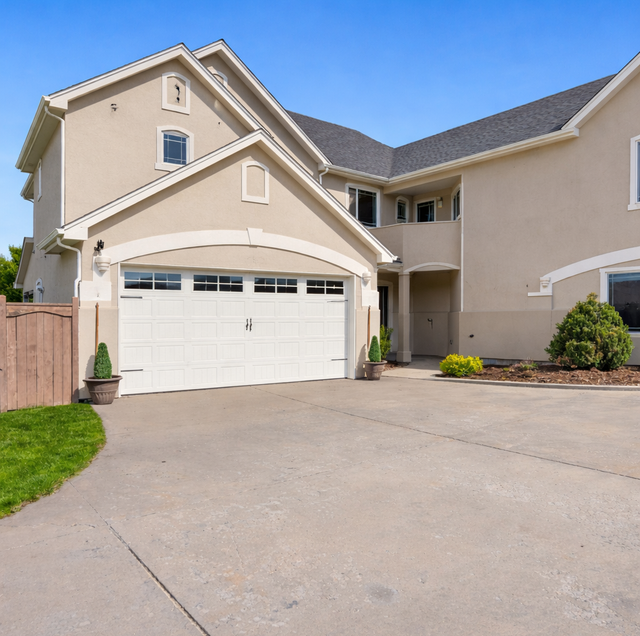
The first thing to settle about Amarr Classica and Clopay Gallery is what neither door is. Both lines sell under the carriage house label, and both photograph like something built from planks and strap hinges. Neither one is an overlay door. The plank lines, recessed rectangles, and raised borders are stamped and grooved into the steel at the factory, formed into the sheet itself rather than applied on top of a flat panel.
That distinction changes what you should be comparing. If an applied overlay is the look you want, each manufacturer sells that as a separate collection: Clopay builds Coachman with a steel overlay and Canyon Ridge with a composite faux-wood overlay, while Amarr builds Carriage Court, Oak Summit, and Hillcrest. A companion article on this site covers overlay construction in depth. Everything below stays with the two stamped steel lines.
One caveat first. Option lists and published figures shift by model year, and each manufacturer's numbers come from its own testing and its own configurations, so they are not interchangeable across brands. Treat every figure here as manufacturer-published, and pull the current spec sheet for the exact model and year before you sign off.
Panel design and how many stamped looks you get
Amarr publishes seven named stamped carriage house panel designs for Classica, so you are choosing from a set of distinct panel layouts, each with its own arrangement of grooves and raised borders.
Clopay organizes Gallery around two stamped design styles: short-panel and long-panel. Short-panel breaks the door into more, smaller rectangles across each section, which reads as busier and more traditional and tends to suit narrower single-car openings and homes with a lot of trim detail already. Long-panel uses fewer, wider divisions, which reads calmer and lets a wide double-car door look like one composed face instead of a grid.
Panel proportion is what people register from the curb, and it is the hardest thing to judge from a manufacturer photo, since those photos are shot on houses with different siding widths and trim.
Layers, insulation, and the published R-value ranges
Both lines are built in one-, two-, and three-layer configurations, and those mean the same thing on either brand: a single-layer door is one steel skin, a two-layer adds insulation behind that skin, and a three-layer sandwiches insulation between two skins.
Clopay Gallery: built-in 1-, 2-, or 3-layer options. Clopay's branded injected polyurethane foam core is called Intellicore, and the company publishes an R-value range for this line running from roughly R-6.5 up to about R-18.4 on its highest-insulation configuration.
Amarr Classica: built in single, double, or triple-layer options, insulated with polystyrene or polyurethane depending on the tier. Amarr publishes an R-value range for this line running from about R-6.64 up to about R-13.35.
Read those ranges as each brand's own published figures rather than a head-to-head score. Manufacturers do not all calculate or report insulation performance the same way, and a range only tells you the span between the least and most insulated build in the family, not what the door on your order sheet does.
Layer count also changes weight. A three-layer insulated door is heavier than a single-layer version of the same size, and it usually runs quieter because the sandwich damps panel vibration. Weight is not a detail you sort out yourself: the counterbalance system has to be sized to the finished door, and spring selection, winding, and cable work are technician tasks on a high-tension system. If you are replacing a light uninsulated door with a heavy insulated one, the springs and often the hardware get changed with it by the installer.
Decorative hardware, where Amarr names the most options
Amarr publishes eight named decorative hardware collections for Classica: Blue Ridge, Alpine, Canterbury, Versailles, Castle Rock, Maple Creek, Nottingham, and Clavos. Those are styling families, not a single strap-and-handle set, and Clavos is the odd one out in the group, built around decorative studs rather than hinge straps and pull handles.
Being able to name a collection is the useful part: it gives you something specific to ask for and to match against the iron already on the house.
Clopay's published Gallery material leads with panel style, window design, and glazing rather than an equivalent list of named hardware collections. That is a difference in how the two lines are presented and packaged, not proof that one door can wear decorative hardware and the other cannot. If a particular hinge or handle profile is the thing driving your decision, check the current published option sheet for the model year on both sides before you rule either out.
Windows and glass, where the naming gets specific
This is the other place both brands get concrete, and they get concrete about different things.
Clopay Gallery glazing: Six named glass options, Clear, Seeded, Rain, Frosted, Obscure, and Midnight Gray. Window and grille designs are published under short codes, with representative examples including REC12, REC14, SQ22, and SQ24 in the rectangular and square families, plus arched styles ARCH1, ARCH2, and ARCH3.
Amarr Classica glazing: Glass options include Clear, Obscure, Frost, Dark Tint, and insulated glass. Amarr also sells decorative window trim as a named system called DecraTrim, with styles including Danube, Madeira, Nile, Rhine, Seine, and Thames, and decorative glass overlay under the DecraGlass name, with styles including Jardin and Trellis.
Two things fall out of those lists. Both brands separate the glass texture from the frame or grille pattern, so you are making two choices rather than one. And privacy and daylight pull against each other: Seeded, Rain, Frosted, Obscure, and Frost pass light while breaking up the view, while darker glazing such as Midnight Gray or Dark Tint cuts visibility into the garage and also cuts what reaches the floor inside.
Treat the specific style names above as representative rather than exhaustive. Glazing and grille lineups are exactly the kind of option list that gets revised between model years, so confirm current availability for the door you are ordering.
Where each door is sold, and what that actually changes
A claim you will run into is that both of these lines are sold only through independent dealers. That is not accurate.
Clopay is an exclusive brand partner at The Home Depot, with a dedicated storefront there, and was named one of Home Depot's Partners of the Year for 2025. Amarr Classica is also offered through a Costco program. Both brands also sell through independent local dealer networks, which is how a lot of these doors get ordered.
What the buying channel changes is who takes the order and which slice of the option list you see. Any single channel's configurator may show a subset of what the manufacturer publishes, which is another reason to check the current spec sheet. What it does not change is the work: the opening still has to be measured before the door is built, the door still has to be installed and balanced by a technician, and service calls still run through a local installer.
Steel thickness, and why gauge is a weak tiebreaker
Someone will eventually tell you one of these doors uses thicker steel. Residential carriage house doors generally run in the mid-to-high-20s gauge range, and lower gauge numbers mean thicker steel. Neither manufacturer publishes an exact gauge on these particular product pages, so a confident one-gauge comparison between Classica and Gallery goes past what either company states.
Even with both numbers in hand, a single gauge step is a very small change in thickness. What matters more for how a door holds up to a stray basketball or a bike handlebar is the number of layers and whether the core is bonded to the skin. A three-layer insulated door resists a dent better than a single-layer door of similar steel because the core backs the skin up.
Narrowing it to one door
Line up the decision against your own house rather than against a spec table.
- Hardware is the deciding factor: Amarr's eight named collections give you a defined set to match against existing iron on the house.
- Maximum insulation is the deciding factor: the top of Clopay's published Gallery range sits above the top of Amarr's published Classica range, with the caveat that the two companies publish those numbers on their own terms.
- Panel proportion is the deciding factor: compare Gallery's short-panel and long-panel treatments against Amarr's seven stamped designs at the actual width of your opening, not at photo scale.
- Glass is the deciding factor: compare the privacy textures side by side in daylight, and decide separately on the grille pattern.
- Availability is the deciding factor: both lines reach buyers through independent local dealers, with Clopay also carried at The Home Depot and Classica also offered through a Costco program.
Then have the opening measured and the existing hardware assessed before anything is ordered, since the door has to work with the track and counterbalance the building gives you.
Frequently Asked Questions
Usually yes, by one of two mounting methods. Surface-mounted kits fasten through the outer skin, so fastener length matters on an insulated door: the screw should not punch into or compress the core behind it. Magnetic hardware sets are the non-drilling alternative and are common on steel doors specifically because the skin holds them, though they can shift if the door gets washed with a pressure washer. Either way, if you are adding a full set of iron across all sections, mention it to the technician who services the door so the counterbalance can be checked against the new weight.
They do. Glass sections weigh more than solid stamped sections, and insulated glass more still, so a glazed door is not balanced the same as the plain version of the same size. Glazing is normally placed in the top section, which puts that added weight at the leading edge as the door rolls into the horizontal track, so the spring system is sized for the finished glazed configuration rather than the base door. Spring and cable adjustment is technician work on a high-tension assembly and is not something to attempt at home.
It is a paint color. Sandstone shows up on the published color cards for these steel doors, and it gets confused with hardware finishes because both are chosen from the same order sheet. Hardware finish and door color are separate line items, and color availability changes by model year, so ask for the current color card rather than an older printed sample. Factory finishes on stamped steel are applied in layers over a treated substrate, and any repaint later needs an exterior-grade coating compatible with that topcoat.
Look at the edge of a raised element from an angle. An applied overlay is a separate board with its own thickness sitting on the door face, so it shows a distinct seam and a hard shadow line where it meets the panel, and you can feel a step with your hand. A stamped panel's grooves and raised borders are continuous formed metal, with a rounded radius at every transition and no joint anywhere. On a painted door in flat light, the two look identical from the street and obvious from three feet away.
Often, but the measurements decide it. The three that matter are headroom, the space between the top of the opening and the ceiling or lowest obstruction, sideroom on each side of the opening for the vertical track, and backroom, the depth from the opening back into the garage for the horizontal track. Low-headroom track configurations and rear-mounted torsion arrangements exist for tight spaces, and choosing among them is installer work, not a catalog choice. Have the opening measured before the door design is finalized, since some configurations restrict which hardware can be used.
Keep the moving hardware clean and lubricated with a lubricant made for garage doors, applied to hinges, rollers, and the torsion tube bearings; general household oil attracts grit and gums up rollers. Wash the painted face with mild soap and rinse it, since grit left in the stamped grooves holds moisture against the finish. Test the safety reverse and the photo eyes at floor level periodically, and have a technician check spring balance and cable condition during service. Do not adjust, wind, or unwind springs yourself.
Hold both panels against your own siding before you commit, then line up a door installation in Brushy Creek once the proportion and the glass are settled, the same ordering and fitting Squared Away Garage Door Service brings to Leander garage door service. Call (512) 456-3781.
