
A Garage Door Cable Is Hanging Loose: Should You Open It?
Quick Answer: With the door down, both lift cables should be tight. Slack on one side means that side's share of the load moved elsewhere. Leave the door closed, leave the opener unused, and have a technician on it first.
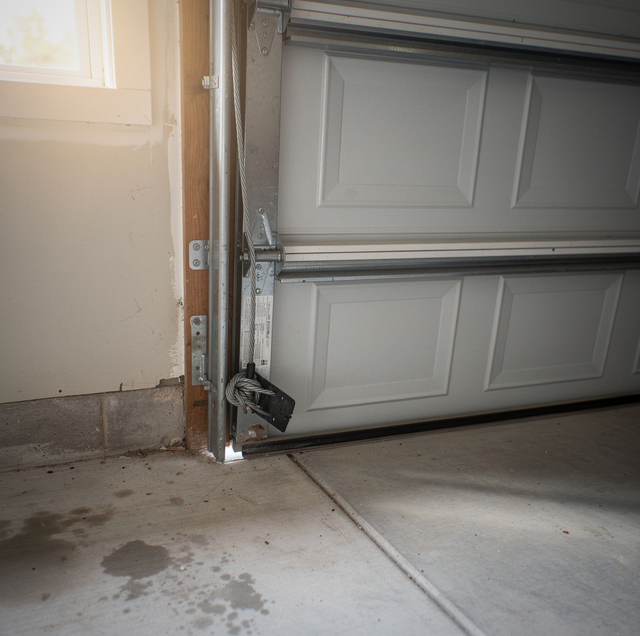
Stand inside with the door fully down and look up the vertical track on each side. A lift cable doing its job runs in one straight line from the bottom bracket at the corner of the door to the shaft above the opening, with no visible bow. Measure what yours is doing instead. Is the slack a finger's width off that line, a hand's width, or a loop you could put a fist through? Which side, facing the door from inside? At what height, near the shaft, halfway down, or bunched at the bottom corner? Those three readings, the amount, the side, and the height, are what everything below turns on. The question before you is not what caused it. It is whether to open the door.
Reading the Slack: How Much, Which Side, at What Height
Torsion counterbalance torque is at its maximum with the door down and its minimum with the door up. Closed, the cables carry more than they ever have, pulled hard into the grooved drum at each end of the shaft. That is why a closed door is where this announces itself: nothing else supports the weight, so a cable that is not tight has stopped carrying its share.
The amount tells you how much cable has been released. A finger's width means the geometry has shifted slightly; a hanging loop means a length that was under load is now free to move. The side tells a technician which end of the shaft to start at, and which bottom corner has been carrying nothing. The height narrows where along the run things went wrong.
Take those readings from where you stand, and do not touch the cable.
Six Readings and the Decision Each One Forces
Work down this list until you find the one that matches. The verdict ending each item is the whole answer for that reading.
- One cable slack, the other tight, the door flat and level on the slab: Nothing leans against it, no vehicle is behind it, and the household has another way in. The door rests on concrete, and the counterbalance does nothing while the drum cannot turn. Safe to wait with the door exactly where it is until a technician can be scheduled during ordinary hours.
- Both cables slack with the door fully down: The counterbalance has stopped holding anything and the door's whole weight is on the floor. Nothing about the door is holding itself up. Do not operate.
- The door sits crooked, or one bottom corner is off the slab while the other is down: The sections have already left the plane they travel in, and the rollers are loaded sideways in the throat of the track. Do not operate.
- Loose wraps at the top, or cable crowded out of its groove: The tension holding those wraps is gone, and loose cable is free to cross itself, pinch, or bind the moment the shaft turns. Do not operate.
- Someone has already run the door since the slack appeared, and it moved: This is the reading that most often ends with a door out of its track. An opener's force settings, tuned for a healthy door, can absorb a good deal of new resistance before they trip. Do not operate.
- A vehicle is behind the door, or this is the only entrance the household uses: The pressure to open it is real, and it is what turns a stable closed door into a much larger repair. Unplug the opener head so nobody settles the question for you. Safe to wait once no one in the house can operate it.
What Slack on One Side Does to the Other
A sectional door is lifted at two corners. A cable terminates at a stamped bottom bracket at each bottom corner, and both run to the same shaft, so the two split the job evenly.
When one goes slack, the weight has to go somewhere else. While the door is down, most of it sits on the slab, which is why nothing dramatic has happened yet. The moment the shaft turns, the door is picked up at one corner by one cable and one bracket sized for half a door. Cable loads are reacted at the end bearing plates on either side of the opening, so a one-sided pull changes what those plates see. Nothing in the door's mechanical counterbalance redistributes the load, so a slack-cable detector, where fitted, stops the door rather than sharing the load.
Why the Next Cycle Is the One That Racks It
The failure has already happened. What has not happened is movement, and movement is the difference between a cable job and a much longer list.
Run the door, and the tight corner starts up while the slack corner lags, twisting the sections across their width. Rollers on the lagging side get driven forward in the throat of the track or pulled clear of it, hinges take a shearing load they were never given, and the bottom section can skew far enough that the door will not come back down square.
Sending it back down does not undo any of it. Reversing direction with a loose cable on the shaft can trap it between the drum and the door, or between the roller and the track.
Why a Door That Still Works Is the Worst Case
The most dangerous version of a hanging cable is the one that opens and closes on its own.
Because it works, nobody calls. The door keeps getting used for days while one side does progressively less and the other progressively more. Every cycle moves the door further from the alignment it was set up in, and the cable that left its position works itself further out with each pass.
Why Closed Is the Safest Place for It to Stay
Down is where you found the problem, and it is the best place for the door until someone qualified is in front of it.
Closed, the weight rests on the slab. No load is hanging from compromised hardware; the opening is secured, and nobody can walk under a door that is already down. Nothing changes as long as the drum is not turning.
Every other position is worse. A door parked partway up, with a slack cable, has open space beneath it and a clear path for gravity to work. Propping one with a ladder or a length of timber puts a person underneath it twice, and neither is rated to catch a falling door.
What the Household Does Until a Technician Has Been on It
Three decisions, made once, cover the whole wait. The door stays closed. The opener stays unused. Everyone uses another entrance until a technician has been on it.
Unplug the opener head at the ceiling outlet, then tell everyone in the house, including anyone with a remote on a visor, that the door is out of service. Move any vehicle needed before the appointment.
One more thing matters here, because the red cord looks like a way around a dead opener. The release cord is safe to use only with the door fully closed and the counterbalance intact, and it is never a way to hold a door open.
When the technician arrives, the most useful thing you can hand over is a door nobody has touched. The cable's resting position, the wraps at the top, where the rollers sit, and how level the bottom section is are all evidence of what happened, and two test cycles erase most of it.
Frequently Asked Questions
No. Slack in the same spot can come from more than one part letting go, and several sit inside a fitting you cannot see. A cable can fail where it is swaged into its end fitting. The fastener holding the bottom bracket to the end stile of the bottom section can pull out. Both look identical from ten feet below. The cause decides the repair, and the slack has already decided what you do until then.
No, and the difference is why much of what gets written about loose cables does not apply here. At the top of travel, the counterbalance is at its minimum, and much of the door's weight is carried by the horizontal tracks and the rollers running in them, so a small amount of visible slack up there turns up on doors working normally.
Report it, though it does not change the decision. A cable leaving its position often announces itself once, as a single sharp bang or a metallic rasp over the last few feet of travel.
Not reliably. A wireless keypad mounted at the door communicates directly with the opener's receiver, and, depending on the model, the lock or vacation setting on the interior console does not always disable it. The same applies to any remote already programmed to that receiver, including one in a vehicle away from the house.
Nothing beyond what's already covered: leave the door in its current position, since that reading is what the technician needs to see. The one preparation that actually helps is clearing anything stored against the bottom corners, since a bottom bracket and an end stile cannot be assessed when stacked with boxes or bins.
Yes. The groove the cable crowded out of can itself be worn from the event, and the set screws holding the drum to the shaft can slip in the same failure. A cable that is simply re-seated in a marked drum without checking either one is the most common reason the same repair comes back out.
Leave the door closed and book a cable inspection — a technician checks the counterbalance, both cables, and the full track path before the door is cycled again. A proper garage door cable repair reseats the drum and re-tensions both sides, and scheduled maintenance tune-ups usually catch the next loose wrap before it ever slips. Squared Away Garage Door Service does both across Cedar Park and Central Texas. Call (512) 456-3781.
