
The Garage Door Fell on Someone: The First Hour, in Order
Quick Answer: If anyone is hurt, that call comes first. A door that came down on a person is out of service until a technician has inspected it. Unplug the opener, leave it where it stopped, and change no settings.
Everyone is out from under the door. That is the first fact, and for the next few minutes the only one that carries weight. The door is where it stopped, the garage is quiet, and nothing has to be decided in the next ten seconds.
What follows is the order in which the next hour should run. It is short, and none of it involves the door moving again.
If Anyone Is Hurt, That Call Comes First
If someone was struck and is injured, call emergency services now and return to this page afterward. That is the last this page will say about it, because judging an injury is beyond what an article can do.
Nothing about the door needs deciding while that call is being made. The rest of this waits.
Stop Using the Door and Unplug the Opener
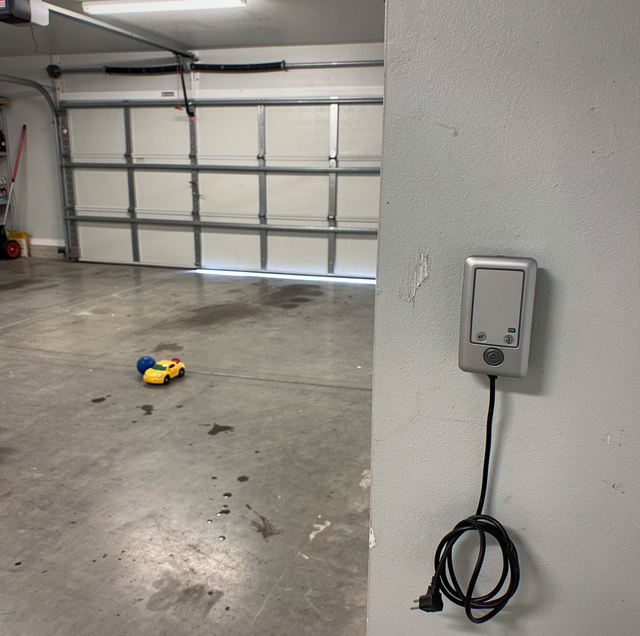
The opener should be unplugged. Not switched off at the wall control, not put in a lock mode, unplugged, so no remote, keypad, phone app, timer, or wall button can start the door by accident. A door everyone has agreed not to use still gets used: by a child who does not know, or by a scheduled close nobody remembers setting.
Do not raise the door to clear the opening and do not run it down to secure the house. Whatever the door did once, it can do again, and a second attempt puts somebody back underneath it.
The door stays exactly where it stopped, and everyone in the house needs telling so by name; a note on the wall gets missed by whoever comes in last. The release cord is safe to use only with the door fully closed and the counterbalance intact, and it is never a way to hold a door open.
If the door is standing open and the house feels exposed, the answer is a locked door between the garage and the living space, plus a same-day service call. It is never blocking, taping over, or bypassing the photo eyes to force a close. That defeats the one protection still known to be working.
Which Protections Were Even in Play
What the door was doing at the moment of contact decides which protections applied at all. If the opener was driving the door down, two of them were in the loop. If the counterbalance let go instead, the door came down under its own weight with nothing driving it, and neither protection had anything to act on. That second case is a counterbalance failure, and it sends the technician to the springs, the cables, and the drums before the opener.
The photo eyes can be set aside quickly. They hold a beam across the opening a few inches above the floor, so a person already under a moving door passes above it and through the protected zone without ever entering it. They were never the layer for this.
On the powered case, one question belongs to the technician: what the opener's resistance sensing was set to allow, and whether a door no longer carrying its own weight ever produced resistance the motor could read as abnormal.
Change Nothing on the Opener
This is the step that gets skipped, and it is the one that matters most.
Nothing gets adjusted before a technician has seen it. That covers the force settings, the travel limits, a sensor bracket that looks crooked, and a bolt that looks loose. Unplugging removes power; it does not clear anything the opener has stored, and no reset or re-pairing routine should be run.
A technician needs to read what the opener was set to, and what it took to move that door, as those were at the moment it happened. Those settings are the only surviving record of the door's condition, and turning a dial to make the door behave better erases it.
The same applies to the door. Leave the hardware, and leave any part that has come adrift where it landed.
Write Down What You Know While It Is Fresh
A fast, frightening event reorganizes itself in memory within hours, and a technician's opening questions are specific. Get these down while they are exact.
What commanded the door, starting with whether anything did: A door that moved with no input at all is a different first question from one that was commanded. If something did command it, name which: the keypad, the wall button, a particular remote, a phone app, or a scheduled close.
Where the door was in its travel: Fully open and just starting down, most of the way down, or stopped somewhere in the middle.
Who was where: who was under the opening, which direction they were walking, who was holding a control, who saw it.
What the door did after contact: Stopped dead, kept moving, reversed partway, or came to rest against something.
What anyone heard beforehand: a bang, a grinding sound, a change in the motor's note, or silence.
What the door had been doing in the days before: A reversal with nothing in the way, a hesitation near the floor, a new sound at one point in the travel. A change shrugged off for a week is often the most useful thing anybody in the house knows.
Add the time of day, and roughly how many times the door had run already.
What the Technician Checks During That Visit
None of this is a household task. It is what a competent visit looks like, so you can recognize one.
A technician reads the opener's force and travel settings before touching them, and writes them down. The door is then secured in the closed position before it comes off the opener, and only then does it get moved by hand, because a sound counterbalance holds the door roughly in place wherever it is left. A door that drops away from that position points straight at the spring side of the system, and that is where the diagnosis starts.
From there it is a physical inspection: both lift cables at their drums, looking for slack and for cable crowding out of its groove; the bottom brackets at each lower corner; the flag brackets where the vertical tracks tie into the framing; hinges, end stiles and center stiles across every section; and the rollers riding in the throat of the track.
The photo eyes are checked for aim, mounting height, and bracket condition, since an out-of-alignment beam can cause an opener to behave oddly.
Parts found out of spec get replaced rather than adjusted back toward spec. On a door that has already come down on a person, that distinction is the whole job.
When the Door Can Be Used Again
A verbal all-clear is worth less than a demonstration. Ask the technician to show you the door reversing on contact, and watch it happen before the door goes back into daily use. If a part is on order and the reversal cannot be demonstrated that day, the door stays out of service.
One thing to arrange before everyone moves on: the household needs telling that the door is back, by name, the same way they were told to leave it alone. A door quietly fixed while half the family is still avoiding it produces a second bad moment for whoever finally uses it. Ask for the same demonstration at every subsequent visit.
Frequently Asked Questions
Leave it. A vehicle sitting in the opening is a far smaller problem than a door run to free it, and a technician can secure the door in its current position on arrival. Use the house door or the walk-through door until then. As a habit afterward, avoid parking directly beneath a door standing partly open.
It matters more than most people expect, and a technician will ask. The figure manufacturers commonly publish for a standard residential torsion spring is around 10,000 cycles, and higher-cycle springs are sold as a separate upgrade tier. A household that treats the garage as its front entrance can run four to six cycles a day, reaching that figure years before the door looks worn.
Yes, and they take a minute. Photograph the door's exact position, both photo eyes and their brackets, the ceiling area where the opener rail meets the header bracket, and any part lying on the floor. Take them before the technician arrives, since the inspection necessarily moves things. Whether a given policy responds is a question for the carrier that wrote it, not for a technician.
If it came to rest fully closed, yes. A door stopped partway is the one to escalate the same day, for two reasons: it is holding position on hardware whose condition is unknown, and a partly open garage is an open house. Say so plainly when booking, because that detail changes how a dispatcher schedules the call.
If the property is rented or professionally managed, the owner or the property manager needs to hear the same day, since they authorize the repair. In a shared driveway or duplex arrangement, tell the neighboring household, too, because a door they see standing open can look like an invitation for them to close it for you.
A manually operated door has no photo eyes and no force sensing at all. The counterbalance alone holds its weight, so a door that came down carries the same out-of-service rule with less margin. Prop nothing under it, tie nothing to it, and treat a stick or a bar wedged in the opening as a hazard in its own right.
Book a safety inspection before the door is used again — a technician reads the settings as they were left, finds what failed, and demonstrates the reversal in front of you. If the door stopped partway and the house is standing open tonight, that is the hour to escalate rather than sleep on, and after-hours emergency garage door service in Round Rock exists for precisely that; the same technicians handle the follow-up work everywhere else in Round Rock once the opening is secured. Squared Away Garage Door Service dispatches from Cedar Park throughout Central Texas on (512) 456-3781.
