

Garage Door Repair Invoices: What to Require Before Paying
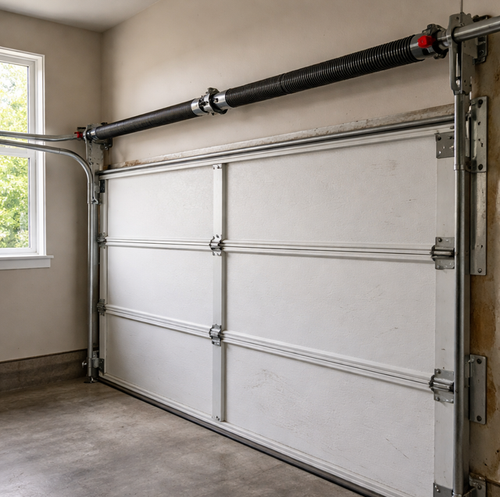
An invoice for a garage door repair reaches the person approving it long after the truck has pulled away. The door works again, the amount resembles other garage door amounts, and the approval takes about four seconds. That signature is the last moment anyone can ask whether the work billed is the work the door needed.
A good service report names the specific part and the balance and safety-reversal results rather than a vague "repaired door." This is about the other half of the paperwork: what you, holding the budget, do with that report once it lands. Invoice review is a purchasing control, not a technical exercise. You do not need to know how a torsion spring is wound to catch a bill that grew for no stated reason.
Set the Line Where Rubber-Stamping Stops
Every approval process already has a threshold, even where nobody has written one. Below some amount, invoices get initialed on sight. Above it, someone reads. An unstated line drifts with how busy the approver is that week, so the same repair draws scrutiny one month and a signature the next.
Pick the line on purpose, write it into your vendor instructions, and add two categories that get a personal read regardless of amount.
Anything touching the counterbalance system- Torsion springs, lift cables, cable drums, the center bearing plate, and bottom brackets carries the door's weight under permanent load. These jobs have the widest spread in how they get billed and the highest chance that a partial fix comes back. Nobody on your maintenance staff should be adjusting spring tension or handling cables to check anything on the invoice; that is trained-technician work with a serious injury risk, and what you need is on paper anyway.
Any second visit to the same door inside a short window: Set the window yourself; thirty days is a common choice, and route every repeat to the same reviewer.
Reconcile the Invoice Against What Was Quoted
Almost every garage door repair starts as a phoned-in symptom or a diagnostic visit, which means the quote was built before anyone could see the cable ends, the drum grooves, or the hinges at the section joints. A scope formed at that stage is a reasonable guess, not a fixed price for a known job, so variance between quote and final invoice is normal.
The useful question is never "did the number change." It is whether the change is explained by a named part or a named condition, which makes the comparison scope against scope rather than total against total. Keep the quote, the dispatch note, or the diagnostic write-up attached to the invoice in the same thread. A reconciliation you have to go hunting for stops happening by the third month.
Variance That Makes Sense, and Variance That Does Not
Legitimate growth in an invoice looks like a discovery. A broken torsion spring gets replaced, and the technician finds the lift cable frayed where it winds onto the drum, so the cable and possibly the drum go on the bill. A bottom bracket turns out to be cracked, visible only once tension is off. A door assumed to have one spring turns out to be a two-spring setup, or the existing spring is the wrong wire size for the door's weight, and the replacement is not a like-for-like swap. In each case, the added line names a part the technician can describe.
The pattern that deserves a question looks different:
The total moved, but the description did not: The scope wording is word-for-word what you approved, yet labor or materials went up.
Two lines describe one thing: A trip charge, a service call fee, and a diagnostic fee on one visit is worth a clarifying email.
"Miscellaneous hardware" is carrying real weight: Small consumables are fine, but a meaningful amount behind an unnamed item is not.
A replaced part the symptom never pointed at: A logic board on a door whose complaint was reversing at the floor is a mismatch, since that behavior usually traces to photo-eye alignment, a down-limit setting, or binding in a track section.
One signal outweighs all of these. Real variance almost always arrives as a phone call before the work happens, not as a surprise on the bill. A vendor who calls from the site to say what they found is one whose invoices you will rarely need to argue with.
Spotting a Return Trip Billed as a New Call
Garage door complaints repeat in ways that pass for fresh problems. "Door will not close" covers photo-eye misalignment, a limit setting that drifted, a warped track section, and an obstruction, and a technician who realigns a photo-eye without finding the loose mounting bracket that let it drift will be back before long. From the office, the second visit looks like a new incident with a new date.
The test needs no technical knowledge. Same door, same symptom family, short interval, no newly named cause on the second report. When those line up, ask one question in writing: what did the technician find this time, and how does it differ from the first visit? An answer naming a different part or failure mode means a real second call, and you approve it. An answer that restates the first visit means the work should be billed as warranty follow-up.
A callback billed as new work is invisible in your spending totals and in your judgment of the vendor, which makes this the highest-value habit in the review.
Judging Labor Time and Trip Charges Without a Rate Sheet
You do not need market rates to tell whether a labor line is reasonable. Two internal comparisons do most of the work.
Compare the vendor against itself: Pull that vendor's prior invoices for the same job type at your properties. Their spring replacements should cluster, and one sitting far outside the cluster has either a reason in the description or a problem in the billing.
Compare the job against its own complexity: A spring changeout on a standard residential sectional door is a bounded, repeatable job. A commercial rolling steel door, a high-lift track configuration, or a jackshaft opener mounted beside the shaft is a different animal, and the extra time is real. The complexity has to show up in the written description, not only in the hours.
Trip charges follow one rule that catches most errors: Several doors serviced at one address on one visit is one trip, unless the vendor returned on separate days at your request. After-hours and emergency rates should line up with when the call was placed and when the technician arrived, both of which your dispatch log already knows.
Line Items Worth a Question Rather Than a Refusal
Not every unfamiliar line is padding. Ask once, write down the answer, and stop asking.
Shop supplies and hardware kits are standard at many shops. "Adjust and lubricate" on a repair call is often real work, since a technician who replaces a roller and leaves the rest of the set dry has done half a job. Disposal of old springs or a replaced section is ordinary, and programming remotes after an opener swap takes time. Replacing a full set of rollers rather than the one that failed is frequently the better call, because a single new nylon roller in a set of worn steel ones tends to be a false economy.
Two questions asked politely, once, do more to correct a vendor's billing habits than one refused invoice ever will.
Build a Vendor Record Across the Portfolio
The point is not to win individual invoices. It is to know, at renewal time, which vendor to keep. A short quarterly tally per vendor gives you that:
Return-visit rate: How often a door came back inside the window you set.
Quote-to-invoice variance: How often the final differed, and whether a call preceded the difference.
Questions per invoice: The share needing a follow-up before you could approve them.
Specificity: the share of invoices naming an actual part and test results instead of "repaired door."
Stock on the truck: How often a second trip was needed because the technician lacked the spring size, rollers, hinges, or photo-eyes your doors use.
Judge response time fairly across the year. Door calls surge on the first hard cold mornings, when chilled steel and a tired spring find each other, and again through hot stretches when heat and heavy cycling work on the same parts. A vendor's slow week during a rush tells you less than their pattern across four quarters.
Turning This Into a Standing Process
Write it down once, on a single page: the approval line, the repeat-visit window, the requirement that every invoice reference the work order and identify which door it covers, and who reviews anything above the line. Send it to each of your garage door vendors and ask them to acknowledge it. Most will, and the ones whose invoices already name parts and test results will barely change a thing.
Then the next time a spring invoice arrives with a cable drum added to it, you will be able to tell inside a minute whether that is a technician who found real damage on a door you own, or a bill that grew on its own.
Frequently Asked Questions
Torsion springs are commonly sold by cycle rating rather than by years, where one cycle is one full open and close. A standard residential spring is typically advertised around ten thousand cycles, with higher-cycle versions available. A door cycling many times a day burns through that rating far faster than a single-family door, so an early failure is often a duty-cycle mismatch rather than a defect. Ask what cycle rating was installed and whether a higher-cycle spring suits that opening before treating it as a dispute.
Yes, and ask for it specifically. A warranty visit that is never invoiced leaves no trace in your payables or service history, so the callback disappears from the vendor comparison you are building. Ask instead for an invoice showing the visit, the parts, and the labor with the charges zeroed out and marked as warranty. You approve it at no cost, and the event stays in the record.
Give your vendors a standing make-safe authorization in writing, and set the limit. It lets a technician secure or lock out a door in a hazardous state, one hanging crooked after a lift cable snapped, for instance, without waiting for approval, while the repair itself still gets quoted and approved separately. Without it, you get either unauthorized repairs on your invoices or a door left unusable overnight.
It adds one check. Compare each repair invoice against what the agreement already covers, since the usual overlap is being billed on a repair call for tasks inside the maintenance scope: lubricating hinges, rollers, and bearings; tightening fasteners; checking chain or belt tension; and aligning photo-eyes. Also confirm the maintenance visits performed match the visit count the agreement specifies, because a missed scheduled visit and an extra repair call often land in the same quarter.
Name one alternate in advance who inherits the same threshold, rather than letting invoices default to whoever opens the mail. Add two guardrails: the person who called the vendor out should not be the sole approver on that invoice, and no approval happens by phone before the written invoice exists. Verbal approvals are where quote-to-invoice differences quietly become permanent.
Reference the disputed line by its number in a written reply, say what you need clarified, and ask for a corrected invoice rather than a credit applied to a later bill. A credit on a future invoice splits one repair across two records, which makes that door's history harder to read a year later when you are hunting for a pattern. Settle the line before the payment run, and note the outcome in your vendor tally.
Ask for a service report you can reconcile line by line — clear parts, clear findings, no follow-up questions needed. Squared Away Garage Door Service serves Cedar Park and Central Texas; every ticket written for a garage door repair in Austin reads the same as one written for a homeowner in Georgetown. Call (512) 456-3781.
