

Battery Backup Garage Door Opener: Do You Need One?
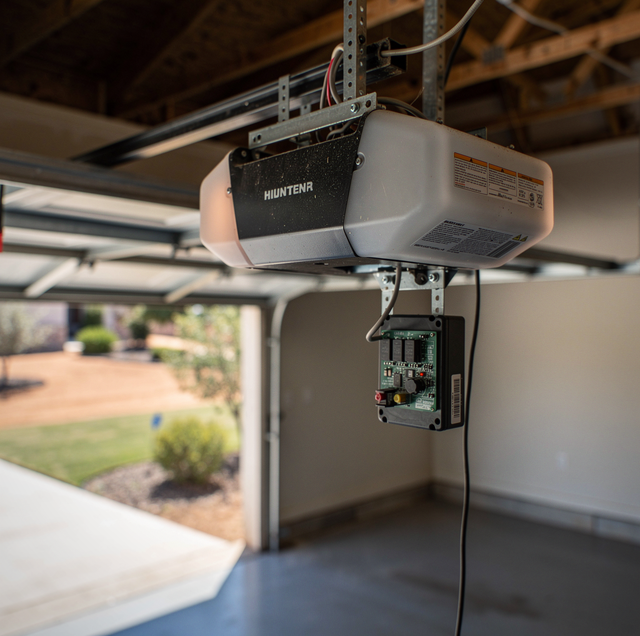
A power outage doesn't just kill the lights. If the garage is wired to the same circuit as the rest of the house, an opener that stops working mid-outage can leave a car trapped inside with no obvious way out except a manual release cord most people have never actually pulled. A battery backup opener exists specifically to prevent that scenario, but whether it's worth adding to your setup depends on a few factors how your household actually uses the garage.
How a Standard Opener Loses Power (and What Backup Actually Does)
A typical garage door opener runs on a dedicated 120-volt household circuit, the same kind of power that runs a light fixture or an outlet. When that circuit loses power, whether from a neighborhood outage, a tripped breaker, or storm damage to the line, the motor simply stops. There's no built-in reserve to fall back on unless the opener has a battery backup system.
A battery backup opener includes a sealed rechargeable battery, commonly a 12-volt unit similar in size to a small power tool battery, wired into the opener's control board. Under normal conditions, that battery sits on a continuous trickle charge and does nothing. The moment the control board senses the household circuit has dropped, it automatically switches the motor over to run off the battery instead, usually within a second or two, often before you'd even notice a flicker.
What the Battery Can and Can't Do
It's worth being specific about what a backup battery actually covers, because it's not unlimited power. Most residential backup batteries are rated for somewhere between 10 and 20 open-and-close cycles on a full charge, depending on the door's weight and the battery's age. That's enough to get a car out (or in) a handful of times during an outage, not enough to run the opener normally for days.
The battery also isn't a surge protector. A power surge, the kind that can come through the line during a storm or when power is restored unevenly after an outage, is a spike in voltage rather than a loss of it, and it's the control board and logic circuitry that absorb that spike, not the backup battery. Some opener models pair battery backup with a built-in surge protection circuit, but that's not always the case, and it's worth asking specifically which protections a given model includes rather than assuming backup power means surge protection too.
Battery Backup vs. Standard Opener
| Feature | Standard Opener | Battery Backup Opener |
|---|---|---|
| Works during a power outage | No; door must be manually released | Yes, typically 10-20 cycles on the reserve battery |
| Keypad and remote function during outage | No | Yes, as long as the battery has charge |
| Manual release cord still needed | Yes, as the fallback | Yes, still recommended once the battery is depleted |
| Ongoing maintenance | None battery-specific | Battery typically needs replacement every 3-5 years |
| Typical upgrade path | N/A | Often available as an add-on module or built into newer opener models |
| Best fit for | Garages with an easily accessible manual release and a secondary way in/out of the house | Homes where the garage is the primary entry, or outages are frequent |
Who Actually Benefits Most From This
The households that get the most practical value from battery backup are the ones where the garage serves as the main entrance to the house, not a side entrance. If the front door isn't used daily and every family member comes and goes through the garage, a power outage without backup means propping the door open manually (a security concern) or using the emergency release to let the door down and leaving it down until power returns.
It also matters for anyone who works from a home office or keeps equipment, medication, or anything time-sensitive in the garage or a vehicle parked there, since backup power means normal access continues rather than waiting out the outage. Households in areas prone to more frequent grid interruptions, whether from aging infrastructure or storm-related outages, tend to see the battery pay for its convenience more often than households in areas with rare, brief outages.
Retrofitting an Existing Opener vs. Buying New
Depending on the opener's age and manufacturer, battery backup is sometimes available as an add-on module that installs into an existing opener's control board, and sometimes it's only available as a feature built into a newer opener model. Chamberlain and LiftMaster both offer opener lines with battery backup built in as a standard or optional feature, and some models pair it with a Wi-Fi connected app so you get a notification when the unit switches to battery power, which is useful for knowing an outage happened even if you weren't home. Whether an add-on module is compatible with an older opener depends on the control board design, so it's worth having a technician confirm compatibility before assuming a retrofit is possible.
Maintenance the Battery Actually Needs
A backup battery isn't a set-it-and-forget-it part. Sealed lead-acid batteries used in most backup systems lose capacity gradually, typically needing replacement somewhere between three and five years, and a battery that's quietly failed won't announce itself until the exact moment you need it, during an outage. Most opener control boards run a periodic self-test and will show an indicator light or a status message on a connected app if the battery is no longer holding a charge, so it's worth knowing what that indicator looks like on your specific model rather than assuming the backup is always ready.
Why Outages and Power Surges Often Travel Together
Power interruptions rarely arrive alone. A severe storm that knocks out household power is often the same event that causes a voltage spike along the line when power is restored unevenly or when nearby equipment resets at once. That combination is why an opener's logic board is one of the more failure-prone parts on a storm-affected door: the same event that triggers the battery backup to kick in can also damage the control board itself if it isn't protected. A whole-house or dedicated surge protector on the opener circuit addresses that second risk, and it's a separate purchase from the battery backup itself, even though homeowners often assume one covers the other.
This is also why, after any outage significant enough to trigger the battery backup, it's worth watching the opener over the next few cycles for anything unusual: a delayed response, the travel limits resetting, or the remote no longer working reliably. Those are signs that the surge reached the logic board, even though the battery backup kept the door operating through the outage.
Installation Considerations Worth Knowing
Not every opener housing has room for an add-on battery module without some rework. Older belt or chain-drive units built before battery backup became a common feature sometimes have a control board that isn't designed to accept an aftermarket battery pack, which is one reason a technician needs to check compatibility rather than assuming any battery pack will bolt onto any opener. Newer opener models with built-in backup from the factory avoid this problem entirely, since the battery bay and charging circuit are part of the original design rather than retrofitted.
Placement matters too. The battery itself generates a small amount of heat during charging, and manufacturers specify a minimum clearance around the opener housing to ensure airflow. In a garage that already runs hot for months at a time, that clearance is part of what keeps the battery from degrading faster than its rated lifespan, so an installer checking clearance is doing more than following a checklist item.
Frequently Asked Questions
Yes, as long as the wall control is wired to the same opener unit rather than being a separate powered device. The battery backup powers the motor, the wall control, and typically the remote/keypad receiver, since they all draw from the same control board the battery backs up.
It comes down to whether the control board has a dedicated slot and charging circuit built in for a battery pack, which most openers built more than roughly seven or eight years ago weren't designed with. A technician can usually confirm this by opening the housing and checking the board for a battery connector, rather than needing to know the exact model year, so it's worth having that checked during a routine service visit rather than assuming either way based on how old the unit looks.
Most modern openers run a self-diagnostic and display a status indicator, either a light on the unit itself or a notification through a connected app, when the battery no longer holds sufficient charge. Some households also test manually by briefly tripping the breaker for the opener circuit to confirm the switchover occurs, though checking the built-in indicator is the simpler routine method.
Yes. Sealed lead-acid batteries lose capacity faster when they're stored at high temperatures for extended periods, which is relevant in an uninsulated garage that gets very hot in summer. A battery rated for 3-5 years under moderate conditions may have a shorter lifespan in a garage that regularly reaches high temperatures for months at a time.
A battery running low on charge can cause the motor to slow down or stall partway through a cycle rather than failing all at once, which is part of why manufacturers recommend keeping the manual release cord accessible and periodically tested even on a door equipped with backup power.
No. A battery backup module works transparently to the opener's normal control system, whether that's a physical remote, a keypad, or a smart app; it simply keeps that system powered when household electricity is unavailable rather than changing how it operates otherwise.
Yes. Commercial rolling steel doors, especially ones used for emergency vehicle bays or loading docks, often use a larger-capacity battery bank or a separate standby power unit rated for far more cycles than a residential 12-volt backup, since the operational expectation is that the door keeps working through an extended outage, not just a handful of cycles.
A backup battery doesn't change anything about day-to-day operation. It just means the one time the power actually goes out, getting the car in or out isn't a manual, flashlight-in-hand event.
Ask about adding battery backup to your opener — free same-day estimates on upgrades and installs. Squared Away Garage Door Service serves Cedar Park and Central Texas. Call (512) 456-3781.
