

Garage Door Safety Checklist: 7 Checks for Kids and Pets
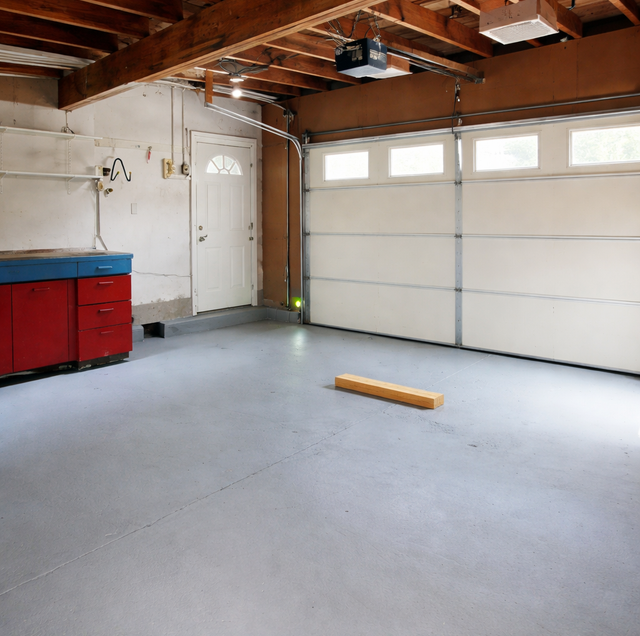
The garage door is the heaviest moving object in most houses, and it is the only one a four-year-old can set in motion by pressing a button reached from a step stool.
The opener is not what makes it safe. A sectional door is counterbalanced by springs, a torsion assembly above the opening, or extension springs alongside the horizontal tracks, and those springs carry almost all of the weight. Openers built since the early 1990s also follow a safety standard calling for two independent entrapment protections: a contact reversal that senses the door meeting resistance, and a non-contact pair of infrared photo-eyes near the floor that reverses the door before it touches anything.
Both fail quietly. A photo-eye nudged out of aim by a bike handlebar still glows. Each check below starts with the failure it exists to catch.
Test the Contact Reverse With a Solid Object
When the door hits an obstruction, the opener does not feel it directly. It infers it: the motor draws more current, travel falls behind schedule, and the controller compares that against a force threshold set by screws on the housing or learned over a full cycle. That threshold can end up too generous, especially if someone raised it to muscle through a binding door.
Lay a solid object flat on the floor, centered under the door; the traditional test object is a two-by-four laid flat, which many manufacturers still name in the manual. Close the door from the wall control and watch the bottom edge: on contact, it should reverse and return to fully open, with no hesitation and no pressing down first.
If it stalls, grinds, or shoves the board, have the force settings and travel limits checked professionally. The common shortcut of raising the force setting to push a stalling door through resistance does the opposite of what you want here: it makes the door more likely to shove through a real obstruction, not less. If a door needs unusually high force just to move at all, the actual problem is almost always mechanical binding somewhere in the track, rollers, or hinges, and that binding, not the force number, is what a technician should find and fix.
Test the Photo-Eyes, Then Check Their Aim
The photo-eye pair is a tripwire, not a curtain. One unit sends a narrow infrared beam across the opening a few inches off the floor; the other receives it, and a break in that beam during closing tells the opener to reverse.
Start the door closing, then push a broom handle through the beam path near the floor, never a hand or a foot. The door should stop and return to full open the moment the beam breaks, and on many models the opener light flashes afterward to flag that a sensor stopped the cycle.
Both eyes sit on brackets clamped to the vertical track and tightened with a wing nut, so a bumped handlebar swings one off target. Most brands put an indicator LED on each unit, but treat it as a hint rather than proof: a dark or flickering light on the receiving side reliably means trouble, while a steady light only means the receiver is getting some signal, not that alignment is good enough, which is why the broom-handle test above is the real check. Loosen the wing nut, pivot the misaimed unit while watching for the strongest, steadiest indicator you can get, then retighten. Measure the height too, since manufacturer instructions call for the eyes to sit no more than about six inches above the floor, and every extra inch widens the undetected band underneath.
Get Down at Floor Level and Find the Blind Band
Because the beam is a single line a few inches up, everything below it is invisible to the non-contact system. A cat stretched flat on concrete, a rolling ball, a toddler's arm reaching under for a toy: none of those necessarily break it. Neither does a pet that crossed the beam's plane and settled past it, since the beam reports the crossing, not what stands beyond.
That leaves contact reversal as the backstop, and it needs resistance to act. A small animal or a child's arm compresses far more easily than lumber, so the door can travel further before the load registers. Crouch at the threshold with the door open and put your eye at beam level: anything passing freely under that line is what the sensors will miss, and that strip of floor is the part you keep clear.
Move the Wall Control and the Remotes Out of Reach
Manufacturer instructions call for mounting the wall station at least five feet above the floor, out of a small child's reach, and where whoever presses the button can see the entire opening. If yours sits at light-switch height, have it relocated.
Remotes: Keep them on a visor or in a bag, never hand one to a child as a distraction in the car, and never leave one in a vehicle parked outside that is not locked.
Keypads: Change the code whenever someone outside the household has had it. A child who watches it being entered will use it, and a keypad has no mounting height protecting you.
The lock or vacation button: Most wall stations have one that disables remotes and keypads while leaving the wall control live, useful the week a curious child works out what a remote does.
Retire the Door as a Play Toggle
Children who grow up with an automatic door treat it as a machine that answers to them, and that is the framing to break.
Racing the closing door: A door on the way down is lowest and fastest in the final stretch, and a running child is bent forward at the wrong height. If the photo-eyes have drifted, contact reversal against a moving body is all that is left.
Riding the door up: Kids hang on the bottom section and get carried. At the top of travel, the sections round the curve of the track and the joints between panels close on whatever is inside them. Letting go from that height onto concrete is the other outcome.
Pumping the button: Stopping and reversing mid-travel loads the trolley, gear, and opener arm in ways ordinary cycles do not, and it teaches a child the door is a toggle rather than machinery.
One rule survives repetition: an adult presses the button, everyone else stands in view, and the door moves only when the opening is clear. The red release cord is off limits too, because to a child it reads as a swing.
Locate the Pinch Points on Your Own Door
Sectional doors hinge. Every place two panels meet is a joint that closes as the door rounds the curve of the track, and a hand on the inside face of a moving door is a hand inside that joint.
Section joints: Many current doors use a pinch-resistant panel profile, a tapered joint shaped so a finger is pushed out as the sections close rather than caught. Older flat-panel doors generally do not, and running the door partway shows which kind you own. If yours lacks that profile, a technician can advise on aftermarket guard strips.
Hinges, roller stems, and the side gap: Hinge leaves and roller stems take a fingertip easily, and a hand pressed flat on the door edge gets carried straight into the vertical track.
The bottom bracket: The bracket at each lower corner anchors the lift cable and is under spring tension whenever the door is down, which is why it carries a warning label. No one in the household should loosen it or work near it. Springs, cables, and the counterbalance system store enough energy to cause serious injury and are professional-only work.
Clear the Path, the Threshold, and the Bottom Seal
The bottom seal: The rubber astragal slides into a retainer along the door's bottom edge. Check for embedded gravel, a hardened stretch, or a toy wedged in the channel; a seal that no longer conforms to the floor leaves a gap a small animal can push under.
The threshold: Sweep it. One hard object under the door edge causes a reversal every cycle, and a household that gets reversed on repeatedly starts holding the wall button down to force the door shut, which is how a working safety system stops being used.
Stored items and toys: Nothing leaning on the vertical track, nothing stacked where the door lands, and a toy bin kept inside the door line. Bikes and trash bins are the usual offenders, and they are what knocks photo-eyes out of aim.
Pet flaps cut into a door panel: A panel is a structural piece of a balanced, hinged assembly, so cutting an opening removes material and adds weight, changing how the door balances. Have the door assessed first, and know that a flap invites an animal into the door's path.
Give the Checklist a Rhythm
Most manufacturers ask for the two reverse tests monthly, and the alignment, seal, path, and control review fits a quarterly pass. Once a year, bring in a technician for spring balance, cable condition, roller and hinge wear, and opener force and travel limits.
Running the list once does not make the door safe permanently. Hardware moves, children get taller and bolder, and a new pet changes the shape of the problem. What it gives you is a baseline, so the next time the door hesitates or a sensor light flickers, you read it as a change rather than background noise.
Frequently Asked Questions
No manufacturer sets an age, and the useful test is behavioral: the child should see the full opening from the control without climbing and wait out the door's full travel. Worth knowing in a house with kids: openers able to close without the operator watching, such as app-triggered or timer-based closing, are built to sound an audible warning and flash a light for several seconds first, and on compliant units that alert cannot be switched off.
If the fault comes and goes, the likelier culprit is the two-conductor wire feeding the sensors, usually stapled to framing at installation, where a staple driven slightly too deep pinches the insulation and produces a fault that surfaces years later. Even so, don't rule out the lenses: an indicator can stay lit while the received signal has fallen below what the opener needs, so the light is a hint, not proof. Clean both with a dry microfiber cloth and skip glass cleaner and solvents, which can haze the plastic and make the signal loss permanent.
Low sun angling into the receiving eye washes out the infrared signal; shields are sold for that, and swapping which side the receiver sits on sometimes fixes it. A dragging roller or a bent track section adds resistance mid-travel and trips the contact reversal. The part that matters most for a family: holding the wall button down is a constant-pressure override on most openers, closing the door with the non-contact protection bypassed. It exists for emergencies, not for living with a fault.
A door parked partway creates problems a pet door does not. The non-contact sensors guard closing travel only, so they do nothing while the door sits open, and the exposed section joint and bottom edge sit at hand and head height for a small child. A properly framed pet door in the walk-through door between garage and yard changes neither the balance nor the structure of the overhead door.
It should hang low enough for an adult to reach without a ladder, commonly around six feet above the floor, and it should never be tied up or shortened to keep it from children, since it is the way out if the opener quits with a car inside. Pull it only with the door fully closed, because releasing the trolley with the door raised can let it drop if a spring has already broken. To reconnect, pull the handle back toward the opener to reset the lever, then run the opener so the carriage relatches onto the door arm with a click.
Yes, a sensing edge: a hollow rubber edge along the bottom of the door that reverses the door on light contact, well before motor-current sensing would register anything. It's common on commercial and high-cycle doors; on a residential system, whether yours can use one depends on the opener's control board, so ask a technician about your specific model.
Hand the yearly run-through to a technician once your own baseline is set — a garage door safety inspection measures reverse force and sensor aim rather than just passing or failing them, and the same crew covers Austin garage door service alongside Cedar Park and Central Texas. Call (512) 456-3781.
