

Garage Door Maintenance Planning for Peak Turnover Weeks
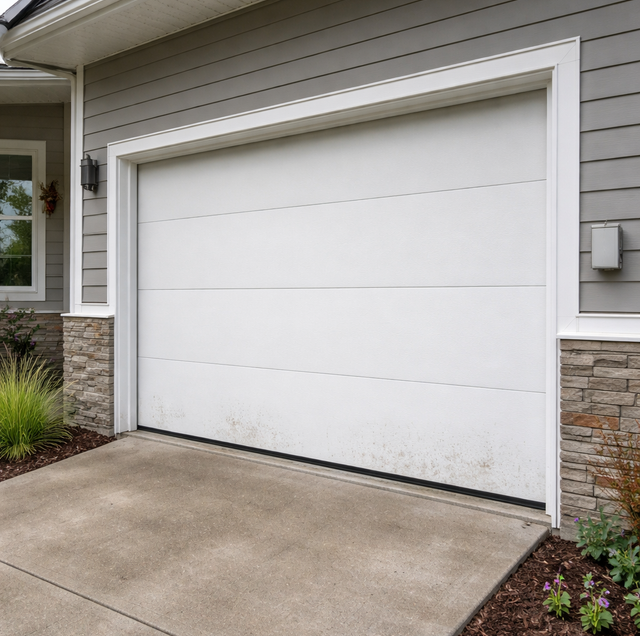
A leasing office runs on two calendars, and they check with each other far less often than anyone assumes. One is built from lease expirations, notice-to-vacate deadlines, and move-in dates already promised to approved applicants. The other is built from work orders, vendor availability, and parts that have to arrive before anything gets fixed. A garage door sits on both calendars at once, which is why it tends to become a scheduling problem well before anyone treats it as a repair problem.
The failure most offices plan for is a door breaking. The one that actually costs them lease starts is quieter: garage door work has finite capacity behind it, that capacity is shared across every property calling the same shop, and demand for it arrives in clusters rather than spread evenly across the year.
Why Turnover Demand Arrives in Clusters
Lease expirations are not randomly distributed. A property that leased up heavily during one stretch gets those leases back together twelve months later, and renewal offers sent on a standard window (many operators work 60 to 90 days ahead of expiration) push the non-renewals into a tight band of vacate dates. Staggered terms and renewal incentives soften the peak, but rarely flatten it. The maintenance side then sees a stretch of weeks running several times normal turn volume.
Most trades absorb that spike by adding bodies. Cleaning, paint, and flooring crews can put more people in more units on the same day. Garage door service does not scale that way. The work needs a trained technician with a properly stocked truck, and no shop doubles its technician count for a six-week rush.
Capacity is also not one number, because garage door jobs do not all consume the same amount of calendar:
- Same-visit repairs: A broken spring, worn rollers, a bent hinge, misaligned safety sensors, or an opener replacement usually close on the first trip, provided the truck is carrying the right part.
- Order-in repairs: A replacement section matched to an existing panel design, a non-standard opening width, a specific window insert, or a complete door install waits on a supplier. Urgency does not shorten a supplier's lead time.
- Sequenced work: Anything that follows another trade, such as an opener install waiting on an electrician to set the ceiling receptacle, inherits that trade's delay on top of its own.
A shop that handles a few doors a day in a normal week does not handle three times that because your leasing calendar says so. The constraint is knowable months ahead, which is the only useful thing about it.
The Difference Between a Booked Slot and a Working Door
The most common bookkeeping error in a turn file is treating the appointment date as the fix date. The office logs "vendor scheduled Thursday," and Thursday quietly becomes the date the unit is assumed ready. If the technician arrives and finds a cracked bottom section on a discontinued panel design, Thursday bought a diagnosis, not a completion.
Track two dates per door, not one. The appointment date belongs to the vendor's schedule. The confirmed-operational date belongs to your leasing schedule, and only the second one should ever feed an availability decision. Ask at booking whether the reported symptom is typically a first-visit fix, and ask the technician to call the office the same day with either a completion or a parts estimate. A shop that closes the ticket days later leaves your leasing team guessing in the exact window where guessing is expensive.
Marketing a Unit the Door Has Not Caught Up To
Setting a unit to available inside the property management software is not a local action. That flag pushes to the property website, listing services, third-party aggregators, and in many cases active ad campaigns. Photos go with it. Pulling that date back later is much slower than setting it: syndication feeds refresh on their own cycle, cached listings linger, and a prospect who saw a date yesterday will negotiate from that date tomorrow.
Two things go wrong when marketing gets ahead of the door. First, self-guided tours: a prospect arrives at a unit whose garage will not open, or whose tour route assumed the garage entry works, and no leasing agent is present to explain it. Second, and more costly, an application gets approved against the advertised date, and a lease gets signed on it. Missing a date you never advertised is an internal problem. Missing a date on a signed lease is a resident-relations problem with a paper trail.
The fix is a sequencing rule rather than more diligence: the availability flag should be downstream of a maintenance confirmation, never parallel to it. Most property management platforms support an internal ready date separate from the marketed date. Use both, and give only the maintenance side authority to move the internal one. Leasing can see it, plan against it, and pre-lease around it, but cannot set it.
Reserving Vendor Capacity Before You Need It
Preventive maintenance protects a leasing calendar mostly by moving work out of the weeks where there is no room for it. That is a scheduling decision made a quarter early, not a repair decision made the morning a door fails.
Give the vendor a forecast, not a surprise: Send the count of garage-equipped units expiring per week for the next two quarters. A shop can staff and stock against a number. It cannot staff against a phone call.
Put the preventive route in the slow weeks: A batched pass through a portfolio's doors during a low-turn stretch, covering balance, hardware condition, and opener function, converts a share of rush-week breakdowns into planned visits nobody is waiting on. Cold mornings stiffen grease and expose a door that was already out of balance, and constant cycling in heat does the same thing the rest of the year, so any door that sat unused through a long vacancy deserves that visit regardless of the month.
Define what priority actually means, in writing: Response window, whether your calls get the first dispatch slot of the day, after-hours coverage, and the tiebreaker when two priority accounts call the same morning. A promise with no tiebreaker is not a plan.
Tell the vendor what is on your properties: Door manufacturer and model, opener brand and model, section profiles, and how many of each size exist across the portfolio. That is what lets a shop stock the wear parts your buildings actually consume instead of the ones an average customer consumes.
Pre-approve the ordinary scope: Decide in advance which repairs a technician may complete without stopping for a second sign-off. The approval gap routinely eats more calendar than the repair itself, and it is the easiest delay on this list to remove.
Allocating Slots by Lease Date, Not Ticket Age
When capacity runs short anyway, most work order systems default to oldest ticket first. That ordering is neutral, which in a rush means it is wrong. Sort the queue by earliest committed move-in date, then by units already marketed with a firm date, then by vacant units with no application against them. A vacant, unleased unit can absorb a two-week wait without anyone noticing. A unit with a lease starting Friday cannot absorb two days.
Then tell the vendor the ordering. Left alone, a dispatcher routes by geography, because that is efficient for the truck. Hand over the priority order along with permission to batch by property wherever the dates allow, and you keep most of the routing efficiency without losing the units that matter.
Getting Leasing and Maintenance to Agree on One Date
Almost every version of this problem is a vocabulary problem underneath: two teams say "ready" and mean different things.
Split the word into states everyone uses the same way: ready to show, ready to lease, and ready to occupy. A unit with an open garage door ticket can often be shown and even pre-leased against a realistic date, but it is not ready to occupy, and the distinction is what keeps a leasing agent from making a promise the turn cannot honor.
Name one person who owns the flip between those states. Shared authority means it happens whenever whoever is under the most pressure gets to it. Add a short standing turn review where the leasing manager, the maintenance supervisor, and during heavy periods the vendor's scheduler look at the same list. Record the reason for any held date in the unit file, because the agent answering the phone needs a real answer, not a blank status.
Before the next heavy stretch, pull lease expirations for the coming two quarters, count only the garage-equipped units, and group them by week. Any week showing more doors than your vendor has ever serviced for you in a single week is the week your schedule breaks. Send that number to the shop now and get the blocked window in writing, while the calendar is still far enough out that a written answer is possible.
Frequently Asked Questions
A full quarter ahead is a reasonable target, and the reason is inventory rather than staffing. Many shops schedule routine work a couple of weeks out while holding part of each day open for breakdown calls, so the near-term calendar has some give. Stock does not. If your buildings use a door line the shop does not normally carry, giving it a quarter's notice is what allows it to bring in sections and matching hardware before the rush instead of ordering them one emergency at a time.
A backup is worth having, but the time to set one up is well before you need it. Most management companies require vendors to clear insurance certificate review, tax forms, and often a third-party credentialing platform such as Compliance Depot or NetVendor before a work order can be issued. That process can take weeks, which means the shop you call during a capacity crunch may be ready to do the work and still unable to be issued a work order. Onboard the backup during a quiet period and give it occasional real work so the account stays active.
Anything depending on a specific manufactured part. Sections for a discontinued panel design are the classic case: when the original stamping is no longer produced, matching one damaged section can be impossible, and the appearance-consistent answer becomes replacing the whole door. Non-standard widths, doors with glazed inserts, and low-headroom conversions needing different track belong here too. When any of these appear during turn prep, re-date the unit immediately rather than optimistically.
It reduces both frequency and downtime. Specifying one opener model across buildings means a failed unit can be swapped from stock rather than sourced, and it keeps remotes and keypads interchangeable between units. On the door itself, high-cycle torsion springs carry a much higher rated cycle life than standard springs and are worth asking about for heavily used units, and sealed-bearing nylon rollers typically outlast the basic steel rollers many builders install. All of that is technician work under spring tension and never a maintenance-staff task.
Handle it as a resident-communication item, not just a maintenance ticket. Notify the resident in writing before move-in, give a specific target date rather than "soon," and offer an interim arrangement such as an assigned surface space if one exists. If the counterbalance is compromised, have the technician secure the door in the closed position and treat the garage as unavailable until the repair is finished. Nobody should be pulling the emergency release cord on a door with a broken spring, and residents should be told that in plain terms.
Yes, and they usually need a separate agreement. A common parking structure entry, a rolling steel door, or a shared multi-bay opening is a single point of failure that affects every resident behind it, not one unit. Commercial-grade openings are often serviced on a cycle-count basis rather than a calendar basis, since a gate cycling hundreds of times a day wears at a different rate than a private door cycling a few times. Put those on a service interval of their own, with a defined after-hours response, and keep them off the same priority queue as unit turns.
Reserve vendor capacity ahead of your heaviest turnover weeks — a planned round of garage door tune-ups clears doors before move-in dates stack up, and the same crews handle Round Rock garage door service. Squared Away Garage Door Service serves Cedar Park and Central Texas. Call (512) 456-3781.
