

Steel vs. Nylon Garage Door Rollers: Which Lasts Longer?
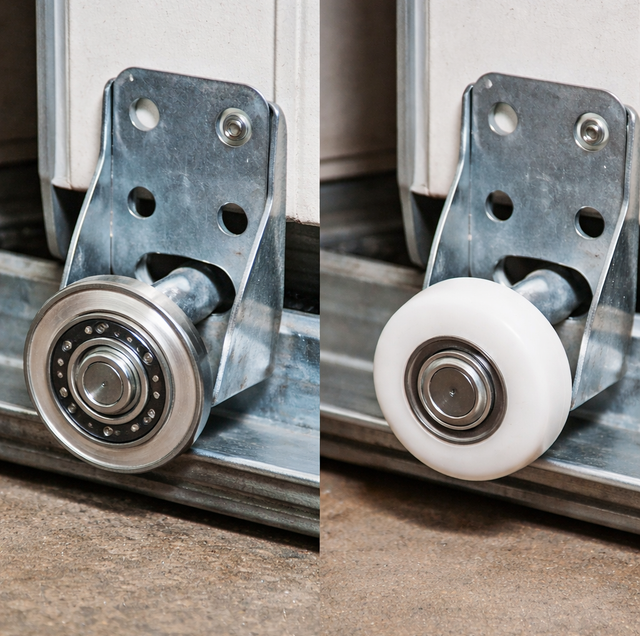
Metal beats plastic. It's the assumption behind a hundred small repair decisions, and it feels obvious: steel is harder and more durable, built to outlast anything molded from nylon. Hand a homeowner the two roller options a technician lays out and ask which one lasts longer, and most people point at the metal wheel without a second thought.
That assumption doesn't hold up here. A sealed nylon roller will often outlast a poorly maintained steel roller, and it will run quieter every single day it's on the door. The reverse is also true under different conditions: a well-lubricated steel roller on a heavy, high-cycle door can outlast a nylon wheel that was never rated for that load in the first place. Which one actually wins the "lasts longer" argument depends on how the bearing is built, how heavy the door is, and how many times a day it opens and closes, not on which material sounds tougher on paper.
How a Roller's Bearing Design Decides Its Lifespan
A roller's lifespan comes down almost entirely to one hidden part: the bearing tucked inside the wheel, not the wheel material itself.
Steel rollers carry a wheel machined from cold-rolled steel, spinning on a set of ball bearings pressed into a race at the wheel's center. That race is usually open to the air rather than capped shut, which is exactly why steel rollers need periodic lubrication. Left dry, dust and moisture reach the balls directly, and the bearing starts to grind instead of spin freely. Kept lubricated on a regular schedule, that same open design lets the wheel carry more weight and survive more open-close cycles than a sealed nylon wheel of comparable size, which is why heavier residential doors and commercial rolling steel doors still spec steel wheels as the default.
Nylon rollers take the opposite approach. The wheel itself is a tire-like polymer molded around a sealed ball-bearing cartridge: a bearing that ships pre-packed with grease and capped on both sides so nothing gets in or out for the working life of the part. That's what "self-lubricating" actually means in practice, not that the roller needs zero maintenance ever, but that nobody has to reach it with a grease gun. The trade-off is capacity. A sealed cartridge bearing is smaller and rated for a lighter load than an open steel race built into a larger wheel, which is why nylon rollers are typically specified for standard residential doors rather than oversized or commercial ones.
Neither design is a compromise. Each one solved a different problem: steel pushed load capacity and cycle life as high as possible at the cost of upkeep, nylon cut noise and upkeep to a minimum at the cost of top-end capacity. "Which lasts longer" only has an answer once you know which door and which household you're asking about.
Why the Same Roller Sounds So Different on the Door
Noise is where the two designs diverge most obviously, and it comes down to what happens between the wheel and the track.
A steel wheel riding inside a steel track is metal contacting metal for the entire length of travel. Any vibration set up by the wheel's own rotation, and any small imperfection in the track's channel, transmits directly into the rail and up into the wall studs the track is bolted to. A nylon wheel interrupts that path before it starts. The polymer flexes slightly under load and absorbs a portion of the vibration before it ever reaches the steel track, the way a rubber gasket muffles vibration between two rigid pieces of machinery instead of letting them transmit noise directly into each other.
This is a mechanical fact about the two materials, not just a subjective preference. A steel-roller door and a nylon-roller door, matched for weight and installed identically, will not sound the same the day they're installed, and the gap widens as the steel roller's bearing starts to dry out between lubrication visits. If your door has already started shaking or jerking as it travels, that's a separate diagnostic question about which specific part is failing right now; this article is about which material makes sense to install when a roller needs replacing regardless of the cause.
Steel vs. Nylon Garage Door Rollers, Side by Side
| Factor | Steel Rollers | Nylon Rollers |
|---|---|---|
| Noise | Metal-on-metal contact transmits vibration into the track and wall studs; gets louder as the bearing dries out | Polymer wheel absorbs vibration before it reaches the track; quiet from installation and stays that way |
| Maintenance need | Open ball-bearing race needs fresh lubrication on a regular schedule to stay smooth | Sealed cartridge bearing ships pre-lubricated for its working life; no grease gun required |
| Typical cycle life (properly sized and lubricated as needed) | Heavy-duty ball-bearing steel wheels carry the highest published ratings of the two, and those ratings are quoted at a stated load per roller, not as a bare number | Sealed residential nylon wheels are rated below a heavy-duty steel wheel of the same diameter, though a sealed nylon roller outlasts a neglected steel one in practice |
| Best-fit door type | Heavier doors: insulated steel, oversized single-panel, commercial rolling steel, high daily cycle counts | Standard residential doors, main-entry households that prioritize quiet operation, lighter wood or aluminum doors |
Published cycle ratings are planning guidance, not a guarantee for any individual roller, and they are written as so many cycles at so many pounds per roller on a door of a given height. Actual life still depends on correct sizing for the door's weight, how consistently a steel roller gets lubricated, and how many times a day the door cycles.
When a Steel Roller Is the Right Call
Door weight is the deciding factor most often: an insulated steel door, a custom wood door, or an oversized single-panel door puts more load on every roller than a standard lightweight door does. A sealed nylon cartridge bearing rated for a lighter load will wear out faster under that weight, no matter how well it's built, because it's being asked to carry more than its design load on every cycle.
High daily cycle counts favor steel too: a household using the garage as the main entry, several trips a day between commuting, errands, and anyone else coming and going, puts a door through more open-close cycles in a year than a garage used mainly for the car once or twice a day. Steel's higher cycle ceiling matters more the faster a household burns through cycles, the same logic that applies to choosing a higher-cycle spring.
Commercial and rolling steel doors default to steel rollers for the same reason: the doors are heavier, the daily cycle counts are higher, and the maintenance schedule that comes with a lubrication routine is already built into how commercial equipment gets serviced.
When a Nylon Roller Is the Right Call
Noise is usually the real motivator: a garage under a bedroom, next to a home office, or attached to a house where an early-morning or late-night opening wakes someone up is a strong case for nylon regardless of the door's weight, as long as the door itself is a standard residential model within the nylon roller's rated capacity.
Skipping a maintenance step matters to some households more than others: a sealed bearing that never needs a grease gun is one less thing on a maintenance list, which is worth something on its own even before factoring in noise. For a lightly used door, that maintenance-free stretch can realistically outlast the homeowner's patience for remembering to lubricate anything else in the garage.
Standard residential doors rarely need steel's extra capacity in the first place: a typical single-family garage door, used a handful of times a day, isn't pushing anywhere near the load or cycle ceiling that makes steel's advantage matter. Choosing nylon on a door like that isn't a downgrade; it's matching the part to the actual job.
What Wears Either Roller Faster, Regardless of Material
A cycle rating describes performance under fairly controlled conditions. A few things eat into that number faster than the rating alone would suggest, on both materials.
Heat and constant temperature swings work against nylon in particular: sustained high heat and UV exposure make the polymer more brittle over years, so a wheel that would otherwise wear down gradually is more likely to develop a crack instead. Cold does something similar from the other direction, stiffening the same polymer and making it less able to flex and absorb vibration the way it's designed to when it's warm. Neither extreme is the whole story on its own; a roller works through both across a normal year, and the wear compounds from both directions rather than from summer heat alone.
High humidity works against steel's open bearing race specifically, promoting rust on the balls and the race itself faster than a dry lubrication schedule alone would account for, which is one more reason a steel roller's actual lifespan depends so heavily on staying ahead of its lubrication interval rather than the rating stamped on the part. Expansive clay soil shifting under a slab over time can also throw a track's alignment out of true, and a track that's no longer running straight adds binding friction that shortens either roller's life regardless of which one is installed.
Making the Call for Your Own Door
Start with the door itself, not a general preference for one material. A standard steel or aluminum residential door within its typical weight range is well within a nylon roller's rated capacity. An insulated door with added hardware, a heavy custom wood door, or anything approaching commercial weight starts pushing toward steel's higher ceiling.
From there, weigh noise against upkeep. If quiet operation matters more than avoiding a lubrication routine, nylon is usually the better fit on a door within its capacity. If the door already runs at the edge of what a sealed bearing is rated for, or the household cycles the door often enough that maintenance intervals matter less than raw durability, steel earns its extra upkeep.
A worn roller doesn't have to be replaced with whatever material was already on the door. Swapping from steel to nylon, or the reverse, is a reasonable time to make the call fresh, based on how the door is actually used now rather than what a builder specified years ago.
Frequently Asked Questions
Mechanically, yes: residential rollers in both materials share the industry-standard 7/16-inch stem and ride in the same 2-inch track, so a technician can swap individual rollers without touching the track. It's not usually the best long-term choice, though, since the two materials wear on different schedules. A door with a mix of new nylon and older steel rollers tends to develop uneven noise and motion, quiet on the panels with nylon and a faint vibration on the ones still running steel, until the older rollers are eventually replaced too.
Some manufacturers make a hybrid design: a nylon tire bonded around a steel hub, giving the wheel steel's structural rigidity at the center with a polymer contact surface where it actually touches the track. These composite rollers are marketed mainly as quiet-operation upgrades for standard residential doors rather than as a heavy-duty option, so they sit closer to nylon's capacity range than to a full steel wheel's.
A general starting point is every three to six months for a door in regular use, more often for a garage that sees daily heavy traffic or sits in a consistently humid environment. The lubricant matters as much as the frequency: a spray-on lithium or silicone-based garage door lubricant reaches the bearing without attracting dust the way a heavier household oil does over time.
Yes. Residential rollers commonly come in 2-inch and 3-inch wheel diameters, and the larger size distributes the door's weight across more surface contact with the track, reducing stress on the bearing per cycle. A heavier door that's borderline for a standard nylon roller sometimes becomes a better fit once stepped up to a larger-diameter wheel, without needing to switch materials at all.
Only replaced. There's no port to add grease and no way to inspect the balls without destroying the seal, so once the bearing binds or the tire develops a flat spot, the wheel and stem come off together as one pressed unit. The swap is hinge work rather than track work: a middle roller's stem sits in the hinge bracket bolted between two panels, so that hinge comes off to free the roller. The top roller is the exception, since its stem rides in an adjustable top fixture that also sets how firmly the top panel pulls against the header seal, which is why that one gets re-set rather than just re-inserted.
No, and the spread inside one material is wider than the gap between materials. Nylon rollers are sold by ball count, commonly 7, 11, or 13 balls in the bearing, and more balls means a smoother, quieter wheel that holds up longer under the same load. Below all of those sits a builder-grade version with no bearing at all: a solid molded wheel spinning directly on its own stem, often what shipped on a new-construction door. Those go out of round fastest, and they are most of the reason nylon carries a mixed reputation. Asking a technician for the ball count tells you more about how long a roller will last than the word nylon does.
The wheel material is the last thing a technician settles, not the first. Door weight sets the ceiling, the bearing inside the wheel decides how long it holds up under that weight, and noise tolerance breaks the tie between two rollers that would both survive the job. Work through those three in that order, and the steel-versus-nylon argument tends to answer itself, usually with a part that asks less of the household over the next decade than the one it replaced.
Count the cycles your door actually runs before choosing a roller — a technician can fit new rollers and hinges to suit that number, and the same call books garage door repair in Hutto if the track has already been chewed up. Squared Away Garage Door Service serves Cedar Park and Central Texas. Call (512) 456-3781.
