

What Home Inspectors Look for on a Garage Door: 5 Checks
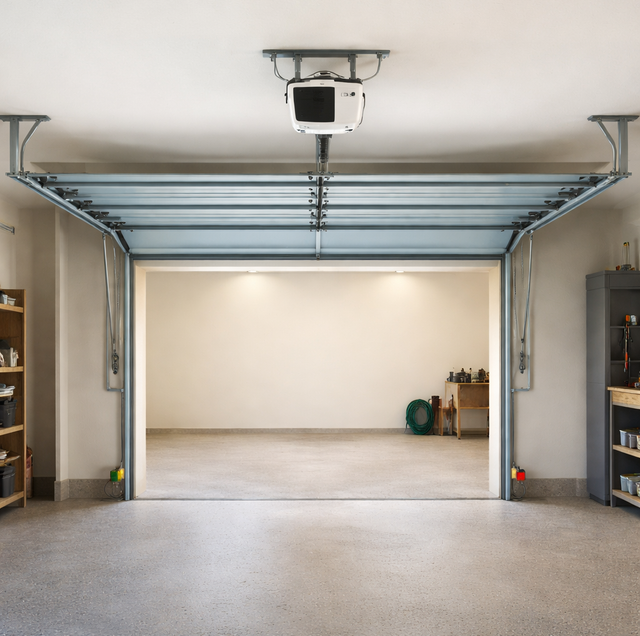
The garage portion of a home inspection report is usually short. Four or five lines, sometimes a photo of a sensor bracket hanging at an angle. It carries more weight than its length suggests, because a general inspector is looking at two different things in that room: a powered mechanical system holding stored energy overhead, and, in an attached garage, the barrier between the vehicle bay and the rooms people sleep in. Knowing what each item tests for makes the report much easier to read from either side of a sale.
Why the Garage Door Earns Its Own Section
A sectional garage door is not lifted by its opener. It is counterbalanced by springs that store energy as the door comes down and release it as the door goes up, and the opener supplies only the small difference plus the push and pull that starts and stops travel. One failed component can turn that balanced load into a heavy one moving on its own schedule, which is why safety devices, spring condition, and balance sit at the top of an inspector's list rather than cosmetics.
The boundaries matter too. A general inspection is a visual, non-invasive survey done in a limited window by a trained generalist, not a door technician, and nobody disassembles hardware or releases spring tension to look deeper. The report holds observations and recommendations, not a certificate, a warranty, or a legal finding.
Check One: The Two Reversal Systems
Powered residential doors carry two independent forms of entrapment protection, and an inspector tests both, because either can fail alone.
Photoelectric sensors: These are the small eyes bracketed to each vertical track near the floor, generally mounted no more than about six inches above the slab. Hence, the beam catches an object before the door reaches it. One eye sends an infrared beam, the other receives it, and breaking the beam during closing is supposed to stop and reverse the door. Inspectors check that both eyes are present, that the brackets are tight rather than swiveled out of aim, that the indicator lights read the way the manufacturer describes, and that the test produces a full reversal rather than just a stop. A sensor knocked loose by a bicycle handlebar or a stack of boxes is one of the most common findings in the whole garage section.
Contact reversal: The second system lives inside the opener and reads resistance. If the door meets an obstruction on the way down, the motor should sense the load and reverse. The standard field test uses a two-by-four laid flat in the door's path, putting about an inch and a half of solid material under the bottom section. The door should strike it and reverse within roughly two seconds. One that hesitates, grinds, or keeps pressing down fails.
An opener with no sensor eyes at all, only contact reversal, is generally an older unit built before manufacturers began pairing the two systems together industry-wide. That gap is less a repair item than a replacement conversation, and inspectors write it that way.
Check Two: Spring, Cable, and Balance Condition
Everything here is inspected by eye or by the balance check described below, never by adjustment, because torsion and extension springs hold enough stored force to cause serious injury. No homeowner, buyer, or seller should adjust them.
Inspectors look for a visible gap in a torsion spring's coil, which usually means the spring has already broken and the halves have separated on the shaft. Rust bloom along the coils matters too, since corroded steel fatigues faster and rust between coils adds friction. On doors using extension springs along the horizontal tracks, they check for a containment cable threaded through the center of each spring, the safety cable that keeps a broken spring from becoming a projectile. Its absence is a frequent write-up on older installations.
Lift cables get a look for fraying, kinking, or unwinding strands, especially at the bottom bracket and where the cable wraps the drum. One that has jumped its drum groove or gone slack shows up as a door hanging crooked.
The balance test is simple to describe: with the opener disconnected at the manual release, a counterbalanced door lifted to about waist height should hold where it is placed rather than dropping or climbing. Correcting balance belongs to a trained technician with the right winding bars.
Springs, cables, and counterbalance hardware store enough force to cause serious injury — never attempt to adjust them yourself. Leave that to a trained technician with the proper winding bars.
Check Three: Panels, Tracks, Rollers, and Hardware
The visual sweep moves from the bottom of the door upward.
Bottom section condition: The lowest panel sits closest to standing water, wet tires, and anything pushed against it. Inspectors note rust perforation, outer skin separating from the insulating core, and a bottom weather seal that is cracked, torn, or missing from its retainer.
Dents and impact damage: Shallow dimples in the flat field of a panel are cosmetic. A crease near a hinge point or a section seam is different, because it changes how that panel flexes each cycle and can pull hinge holes out of alignment.
Hinges and rollers: Cracked or elongated hinge plates, particularly at the positions carrying the most load, get flagged, as do rollers with flat spots, missing bearings, or enough shaft wobble to let the wheel tilt in the track.
Track and mounting: Bent, pinched, or spread track, misaligned splices between the vertical and curved sections, and loose lag screws in the jamb brackets or overhead track hangers all appear regularly. Loose fasteners matter more than they look, since track that shifts under load is the usual path toward a door coming off its rails. An inspector describes the pattern and recommends evaluation; sorting cause from consequence is service-call work.
Check Four: Opener Age, Force Settings, and Power Supply
Most openers carry a manufacturing date on a label on the motor housing, often on the end panel or near the light socket. That date drives several notes at once: whether the unit predates two-sensor entrapment protection, whether it uses a fixed transmitter code rather than the rolling code common on newer units, and whether parts such as a logic board or a gear-and-sprocket kit are still available.
Force settings get attention when the door behaves oddly. Openers have adjustable down-force and up-force, plus separate travel limits telling the motor where the floor and the fully open position are. A door that reverses just before it seats can be a travel-limit issue. A door needing unusual effort to move is reporting something mechanical. The dangerous shortcut, one technicians see often, is dialing the down-force up so the opener can shove past the resistance. That hides the fault and weakens contact-reversal protection at the same time, since the opener now needs more resistance before it decides something is in the way. The right order is to find the binding roller, the out-of-balance door, or the track fault first, then set force where the manufacturer specifies.
If a door reverses just before seating, check the travel limit before touching the force dial. Cranking up the down-force to push through resistance hides the real fault and weakens entrapment protection.
How the opener is powered gets noted as well. A unit running from an extension cord instead of a dedicated ceiling receptacle is a standard write-up, and correcting it involves the home's wiring, so it belongs to a licensed electrician. Manufacturer instructions call for the wall control station to sit above a small child's reach, typically at least five feet up, and where the operator can see the door. The manual release cord should be present, intact, and low enough to grab.
Check Five: The Separation Between an Attached Garage and the House
Sellers rarely anticipate this one, and it sits in the same section of the report. In an attached garage, the shared walls and ceiling are treated as a fire-resistive assembly, and inspectors look at whether that assembly is continuous.
Typical observations: gypsum board missing, cut open around a pipe or wiring run, or never finished behind shelving; unsealed penetrations where an outlet box, plumbing line, or duct passes through; an attic hatch in the garage ceiling left uncovered; and supply or return air openings connecting the garage to the home's ductwork. Where living space sits directly above the garage, the ceiling is generally expected to use a heavier fire-rated board than a plain wall.
The passage door into the house draws its own note: a solid wood or solid-core steel door of substantial thickness, or one carrying a fire rating, with intact weatherstripping and, on many houses, a self-closing device such as spring hinges or a closer arm. A hollow-core door with a pet-flap cut-out is a reliable red flag.
What applies to a specific house depends on when it was built, what was permitted then, and local amendments, so that question belongs to your inspector and your local building department rather than a general article. Treat this as orientation for what you may see written up, not a determination about your property.
What Happens After the Report
Inspection reports describe conditions and suggest next steps. Phrasing along the lines of "recommend evaluation and repair by a qualified specialist" is normal, and it is not a failure notice. A buyer's practical move is to have a technician assess the flagged items before deciding what to raise in negotiation, since a loose sensor bracket and a corroded spring set belong in different conversations. A seller who runs the two reversal tests and books a service call before listing photos keeps the garage from becoming a bargaining item. Either way, the repairs follow one rule: springs, cables, counterbalance hardware, and anything involving the home's wiring go to a trained professional.
Quick Answer: A home inspector checks five things on a garage door: the two reversal systems (photoelectric sensors and contact reversal), spring and cable condition plus balance, panel and track hardware, opener age and force settings, and, in an attached garage, the fire-separation between the garage and living space.
Frequently Asked Questions
Usually not in any depth. Most inspectors cycle the door from the wall control and treat handheld remotes and exterior keypads as accessories outside a general inspection's scope, sometimes marking them "not inspected." An exterior keypad runs on its own small battery that dies quietly, and remotes have to be handed over at closing. On rolling-code units, clearing the opener's memory and re-pairing only the transmitters the new owner keeps is a sensible closing-day step, since a remote left in a traded-in car is a real security gap.
The fire-separation portion drops out, since there is no shared assembly with living space. Everything mechanical still applies. Detached structures also pick up items inspectors watch for elsewhere: settlement or cracking that has racked the door opening out of square, an exterior service door and its threshold, and receptacle protection in a building that often has damp floors. One with its own subpanel or a buried feeder from the house gets a line in the electrical section and a referral to a licensed electrician.
Intermittent reversal usually traces to something a one-time test does not reproduce. Common culprits: direct sun striking the receiving eye at certain hours, a film of dust or a cobweb across a lens, a bracket loose enough that vibration shifts aim a degree or two mid-cycle, and sensor wire stapled too tightly to the jamb, slowly cutting into the insulation. Many openers log the event, flashing the motor unit's light a set number of times to signal a sensor fault, with the pattern listed in the manual. Noting when it happens gives a technician a head start.
No. Verifying a rating takes the manufacturer's label and, in some places, permit records, which falls outside a general inspection. On a door built to a wind-load rating, the label is typically applied to the inside face of one section or to the track, identifying the model and the rating it was tested to. It matters if you are pulling a permit for a replacement or answering an insurance question, so photograph it before any panel is swapped. Reinforcement struts across the back of the sections hint at a higher-load door, though only the label confirms it.
It can be, usually as a maintenance note rather than a safety defect. Openers with a backup battery carry a status indicator on the motor housing that changes color or blinks when the battery is depleted or has reached the end of its service life, and manufacturers generally rate those batteries for a small number of years. Smart features (Wi-Fi connectivity, app control, camera modules) sit outside a general inspection's scope, so nobody verifies that the app pairs. Sellers relying on app-only access should remove the door from their account and hand over the physical remotes.
Different purpose, different depth. An inspection is an observational snapshot taken for a transaction. An annual service is hands-on: lubricating hinges, roller bearings, and spring coils with a lithium- or silicone-based garage door lubricant (a solvent-type penetrating spray is the wrong product, since it strips lubrication rather than leaving it), wiping tracks clean instead of greasing them, torquing lag screws and jamb-bracket fasteners, checking cable drum set screws for slippage, measuring balance, and resetting travel limits and force to specification. That work surfaces things a visual inspection cannot, which is why the two are not substitutes.
Book a pre-sale garage door service visit — the safety tests, spring check, and hardware tune-up handled before the inspector arrives. Anything the walk-through turns up goes onto one work order through garage door repair in Brushy Creek, and sellers who want the findings on paper can add a documented safety inspection. Squared Away Garage Door Service serves Cedar Park and Central Texas. Call (512) 456-3781.
