

Garage Door Make-Ready Without Blowing the Move-In Date
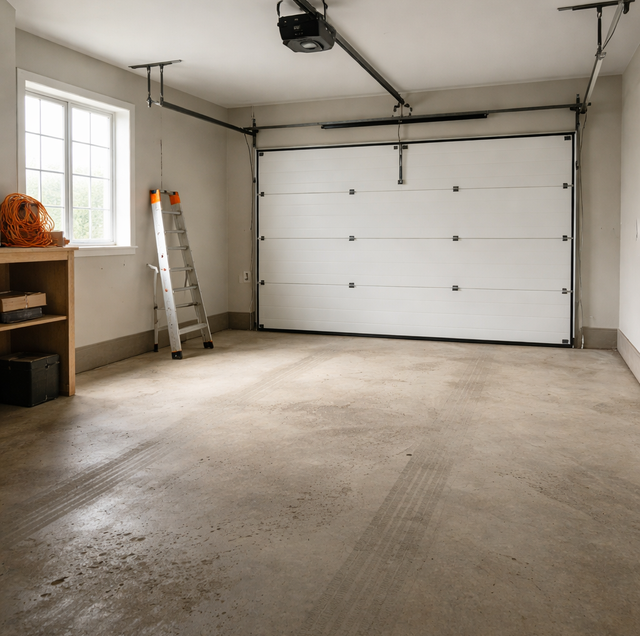
Ask a maintenance supervisor which make-ready item gets dropped when a turn is running behind, and the garage door comes up more often than anything else. Not because anybody decides to drop it. Because it is the one item on the punch list that nothing downstream is waiting on. The tub has to cure before the cleaners go in. The floor has to be down before the appliances land. Paint blocks almost everything. The garage door blocks nothing, opens fine when the tech walks past it, and shows no visible defect on a walk-through even when one of its safety systems has been dead for months.
A homeowner turns a garage over maybe once a decade, so improvising works. A community running fifteen or twenty turns in a heavy month cannot improvise, and at that volume a skipped item stops being an oversight and becomes the property's real policy. The fix is not a longer checklist. It is where the door sits in the turn sequence, what gets written down per unit, and what happens when the check finds something on a Friday with a move-in booked for Monday.
The mechanical side of the check is settled ground and is covered in depth elsewhere: clearing the opener's memory and reissuing access, testing both layers of entrapment protection, a look-but-do-not-touch pass over the springs, cables, and panels, and a hand along the bottom and jamb seals. Everything below is the layer around that.
Why the Door Ends Up Last on the Punch List
Two forces push it there. The first is scheduling. Every other trade on a turn has a successor waiting on it, so a delay in paint or flooring generates a phone call from somebody. The door has no successor, which means nothing surfaces when it quietly moves to tomorrow, then to the final walk, then to whenever a resident complains.
The second is that door defects are latent in a way paint defects are not. A scuffed wall announces itself from the doorway. A photo eye knocked half a degree out of alignment during the flooring install, a lift cable with three broken strands at the drum, an opener whose contact reversal has quit: none of those change how the door looks or how it behaves on an ordinary cycle, so the unit passes a visual walk while carrying a problem the walk could never have found. There is a plainer reason on many properties too. If the garage faces a breezeway or sits in a detached bank across the lot, the person clipboarding the interior never physically passes it.
Split the Check Into Two Touches
The most useful change most teams can make is to stop treating the door as one task and put it at both ends of the turn instead.
The scope pass happens as early as key recovery allows, ideally on the same walk where the rest of the turn gets scoped. Everything on it is inspection: a full-cycle watched start to finish, both reverse tests, a visual read of the counterbalance hardware from a safe distance, the seals, the track, and rollers. Anything it turns up on the springs, cables, or drums goes straight to the vendor, since that hardware holds stored energy whether the door is moving or not. The point of putting this first is not thoroughness. It is lead time. A finding on day one has the whole turn window to resolve; the identical finding at the final walk has hours.
The verification pass happens after the trades are out. Two reasons. The garage is where crews stage material, lean ladders, and roll dollies, and a sensor bracket sits at exactly dolly height, so a door that passed on Monday is not guaranteed to pass on Thursday; re-running the reverse tests at the end catches damage the turn itself caused. The access work also belongs here rather than at the start, because wiping the opener's memory and programming a fresh keypad code on day one means that code circulates among vendors for two weeks before the resident ever sees it.
The Turn Record Is Not the Asset Record
Properties that keep a per-door asset inventory sometimes assume it covers this, and conflating the two makes both records worse. An asset record follows one door across its whole life: install date, opener model, spring type, service history, position in the replacement forecast. A turn record covers one handoff, and it answers a different question, which is what condition this door was in, on this date, going into whose hands.
A workable turn record fits on one page:
Unit ID and turn date: The same unit identifier used everywhere else on the turn.
Who performed it: A person's name, not a company or a crew. If a finding is questioned nine months later, somebody has to be able to say what they saw.
Pass or fail per item, with the method noted: Contact reversal, beam interruption, full cycle, counterbalance visual, seals, track and hardware. Pass or fail sorts and totals. A note reading "door ok" cannot be queried, compared, or defended.
Access issued and reset confirmed: How many remotes and keypad devices went out, to whom, and confirmation the opener's memory was cleared before anything new was paired. That count is what move-out reconciles against.
App account status: Which name the manufacturer's cloud account is in. This gets recorded wrong constantly, because people assume a local reset handles it. Clearing the opener's memory at the wall console does not remove anyone from that account, and neither does a factory reset of the opener; the account lives with the manufacturer, and only the account holder or whoever administers it can remove a user. Hence the case for keeping the account in the property's name and issuing revocable access per resident, and the record should say which of those two situations you have.
Referred items and their ticket number: Anything handed to the vendor, with the date it closed. An open referral with no closing date is the line that tells you a unit shipped with an unresolved door.
Photos, named by unit and date: Stored on the turn ticket, not in somebody's camera roll.
One cross-feed matters: any vendor referral raised on a turn should also land in that door's asset record, or the service history ends up split across two systems nobody reconciles.
What Changes at Twenty Turns a Month
Volume changes the failure mode. At one turn, the risk is forgetting. At twenty a month, the risk is inconsistency, which is what makes a year of records worth less than the time it took to fill them.
Write the sequence down in running order: Not a training document, a short card in the actual order of operations, posted in the maintenance closet and duplicated in the truck. A fixed order means a new hire or a temp during a lease-up runs the same steps as the ten-year tech, and the next person can tell what was and was not done.
Use fields, not a notes box: One form, the same fields, every unit. That is the difference between a stack of paper and something you can sort by building at year-end.
Pick the medium for retrieval, not for capture: Paper fills faster with gloves on and works in a detached garage with no signal, while digital is the only version anybody can query later. Teams running real volume tend to capture on a phone where reception allows and photograph the paper form where it does not, so the record stays in one place even when the entry method changes.
Batch the vendor handoff: Collect the week's referrals by building and hand them over as one list. A vendor scheduling one visit against six units routes a truck differently than one answering six separate calls.
Do not budget a fixed number of minutes per unit: A door that passes everything is a short stop, while a door that fails a reverse test, or one where nobody can say how many remotes are in circulation, can absorb most of a morning. Publishing an average per-unit time is how the item gets rushed on the units that most needed the time.
Getting Leasing and Maintenance on the Same Date
The worst version of this is purely a communication failure. Maintenance marks a unit ready with the door item still open, leasing reads "ready" and sets the move-in, and the finding surfaces on move-in morning with a rented truck at the curb.
Three habits close that gap. Give the door its own named status on the ready checklist instead of folding it into a general maintenance-complete flag. Hold the key and code packet until that status closes, which is natural enough given that the code packet is the door item. And get a plain lead-time rule from your vendor: rollers, seals, sensor alignment, cables, and common spring sizes are usually truck stock and often clear in one visit, while a matched section in a discontinued panel profile or a control board for an out-of-production opener can involve a real wait. Leasing does not need to understand the repair, only whether a finding threatens the date.
When the Check Fails, and Move-In Is Friday
"Call a technician" is the correct instruction and a useless plan by itself, because the live question is what happens to the move-in date while the technician gets there. Sorting findings into three buckets makes that call fast and consistent instead of a judgment made under pressure.
Unsafe to operate: A failed contact reversal, a beam test the door ignores, visible damage to a spring or cable, a door that will not hold position. The unit does not deliver with that door in service. The two honest options are to secure the door closed and deliver the unit with the garage out of service, in writing, with a repair date the resident is told before they sign, or to move the date.
Usable but degraded: A stiff or torn seal, a noisy roller, a dent in a section that still tracks and seals. Deliver, record it with photos, put it on the next scheduled visit, and tell the incoming resident it is a known item so it does not come back as a new damage report in week two.
Access unresolved: A remote unaccounted for, or a cloud account still in the outgoing resident's name. Nothing mechanical is wrong, so this is the bucket teams are most tempted to let ride. Treat it as blocking anyway, since it is the cheapest of the three to resolve and the worst to discover later.
Almost every option in the first bucket depends on having run the scope pass early. Found Monday, you are choosing between a repair slot and a small schedule adjustment. Found Friday, you are choosing between delivering a unit you should not deliver and calling a resident whose truck is already loaded. Whether any of the repair is chargeable against the outgoing resident's deposit is a lease and local-rules question rather than a maintenance one, so route it to your governing documents and your attorney instead of settling it on the turn.
What the Record Buys Across a Year of Turns
For one unit, the turn record does what everybody expects: it sets a dated baseline so a later damage conversation compares photographs instead of memories. That is the small version of the payoff.
The larger one shows up when a year of turns is read as a set. Panel dents clustering on bottom sections in one building usually point at a tight apron or turning radius rather than careless residents, which is a site problem with a site fix. A shared entry that produces a finding after every heavy move-in weekend is telling you box trucks are clipping the header. Consistency is what gives any of it weight: a file where every unit was recorded the same way all year is hard to argue with, while a file with photos only for the units somebody already suspected invites an obvious question about why that one got special attention. Reading the set once a quarter also tells you which buildings belong in next year's capital plan, and it takes no extra visits to produce. All of that starts the same way: put the door in the sequence twice and on one form, beginning with the units coming back this month.
Frequently Asked Questions
Split it by scope rather than by preference. A trained in-house tech can run the cycle, both reverse tests, the visual hardware pass, and the access reset; anything touching the counterbalance goes to the vendor. Properties with steady turn volume get more out of asking a vendor to hold a recurring block, a standing half-day every week or two, than out of dispatching per unit. Referrals collected since the last block clear in one routed visit, and the truck gets stocked for the opener models that property actually runs.
Record it as a variance with the count, not just a note that the memory was cleared. The wipe does de-authorize the missing unit, so the security exposure closes, but the variance is the useful data point. Buildings that keep producing unreturned remotes are candidates for keypad-only issuance at move-in, and that pattern only becomes visible if somebody counted. It also gives move-out accounting a number to work from rather than a recollection.
Two records. The unit they leave gets a full turn record like any other, and the unit they enter gets its own. The tempting shortcut is carrying the remotes across, which is where it goes wrong: a remote paired to one receiver still has to be taught to the new unit's receiver, and the old unit's memory still needs clearing. Transfers also tend to run on compressed timelines with no vacancy in between, so the scope pass on the receiving unit is worth pulling forward further than usual.
Partly. The prior turn's record and photos are a current baseline, so the condition side can lean on them rather than starting over, and anything referred out and closed since then is already known. What should not be shortened is the reverse testing and the access reset. Two move-ins and a move-out have run through that garage in a short window, which is exactly the traffic that knocks a sensor bracket out of line, and a fresh set of remotes went out on the last turn that now has to come back.
Give it a trigger tied to move-in volume rather than to any single unit. Shared entries take their worst hits during heavy move-in periods, when box trucks and rental vans taller than a passenger vehicle come through an opening sized for cars, and a header or track strike frequently gets reported by nobody. A check scheduled after a lease-up weekend or the end-of-month cluster catches that while it is still an alignment issue.
Retention length depends on your deposit accounting rules and any claim window that applies where the property operates, so set it with your attorney rather than by habit. On storage, one detail catches people out: many management platforms and messaging apps re-compress image attachments, and the compressed copy can lose both fine detail and the capture date embedded in the original file. Keep the originals somewhere untouched and treat the platform copy as a convenience view, since that metadata is a meaningful part of what makes a dated record useful.
Put the door on the turn calendar instead of the punch list — Squared Away Garage Door Service schedules garage door maintenance and tune-ups for Cedar Park and Central Texas communities, and handles garage door repair in Austin when a unit fails its check. Call (512) 456-3781.
