

Warehouse Door Maintenance: Why High-Cycle Doors Fail Early
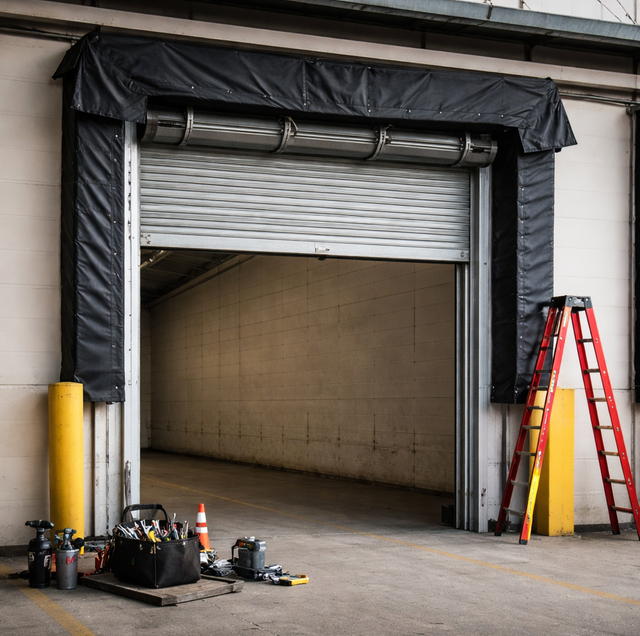
The maintenance schedule most warehouse doors run on was written for a different door. Residential guidance assumes a door that opens a handful of times a day, hangs in reasonably clean air, and spends most of its life sitting still. A door on a shipping bay does none of that. It runs dozens of cycles before lunch, it sits above a floor that produces its own grit, and every time it moves it pulls that grit toward the parts that can least afford it.
That gap between assumed duty and real duty is where most early warehouse door failures start. Nothing exotic breaks: rollers, hinge pins, bearings, seals, and operator electronics fail in ordinary ways, just far faster than planned for. Understanding why is what tells you how often to intervene.
Cycle Count, Not the Calendar, Sets the Service Interval
Almost every wear item on a sectional or rolling door wears per cycle, not per month. Torsion springs fatigue because the steel is wound and unwound, one loading event per open-and-close. Hinge pins elongate their holes a fraction at a time, lift cables flex where they wrap the drum, roller stems spin in their bearings, and operator relays, chains, and belts count starts rather than days.
A door that runs dozens of times a shift reaches its hardware's rated cycle life in a fraction of the calendar time a door running a handful of times a day would take, even though both doors are the same age on the wall calendar. That gap is the reason a warehouse door needs its own service rhythm rather than the one printed in a residential owner's manual.
Spring work is not a facilities-team job. Torsion springs, lift cables, drums, and the shaft they sit on hold enough stored energy to cause serious injury, and they stay dangerous even when the door is sitting closed. Counting cycles, listening for changes, and scheduling service are yours. Touching the counterbalance is a technician's.
Dust Turns Lubricant Into an Abrasive
Warehouse floors generate particulate constantly: pallet splinters, corrugated fiber, concrete dust from forklift traffic, and whatever the product sheds. Air movement from open bays and ceiling fans keeps it circulating, and it settles on the upward-facing surfaces of the track, the ledge inside the vertical run and the full floor of the horizontal run, both carrying an oil film.
Grit in a track behaves the way it does in a bicycle chain: the lubricant meant to protect the metal is what carries the abrasive into the contact points. A greased track in a clean garage stays greased. A greased track in a warehouse turns into a lapping compound that grinds roller stems, wears the track surface, and packs into hinge knuckles. A few practices follow from that, and they surprise people:
Tracks get cleaned, not lubricated: Wipe the inside face of the vertical and horizontal track with a clean dry rag or a rag with a small amount of solvent, then leave it dry. Rollers are meant to roll along the track, not slide through grease.
Lubricant belongs on pivot points only, sparingly: Hinge pins, the roller stem where it enters the bearing, bearing plates, and the operator chain get a light application of a lithium-based or silicone-based door lubricant. Wipe the excess immediately. Anything left on the surface is a dust magnet.
Penetrating sprays are not lubricants: A general-purpose penetrant thins and washes out the grease already in a bearing, then evaporates and leaves a tacky residue that holds dust. It can free a seized fastener. It does not belong on door hardware as a standing practice.
Photo-eye lenses and reflectors need wiping: Dust film on entrapment-protection sensors causes nuisance reversals long before it causes an outright failure. Operators get blamed for faults a clean rag would have fixed.
Dust also finds the operator. Ceiling- and wall-mounted units draw cooling air through vents, and the same particulate coats boards, heat sinks, and contactor surfaces, which is where heat enters the picture.
Heat Changes Two Things at Once
Heat stratifies. The warmest air in a tall building sits at the ceiling, which is where a trolley operator, or a jackshaft unit mounted beside the torsion shaft, lives. Two problems follow.
Electronics run hotter than the room: Logic boards, capacitors, and motor windings all have a temperature ceiling, and a dust blanket on a heat sink insulates it further. Most commercial operators include a thermal overload that shuts the motor down before damage occurs and resets once it cools. A door that quits mid-shift and works again an hour later is usually reporting a heat problem, not an electrical fault, and treating it as a mystery instead of a symptom is how a board eventually gets cooked.
Oil films thin as temperature rises: Lubricant viscosity drops with heat, so the film between a roller stem and its bearing gets thinner exactly when high cycle rates are generating the most friction. Thinned lubricant also migrates, creeping out of bearings and down the door face, where it collects dust and protects nothing.
Heat works on non-metal parts too. Vinyl and rubber bottom astragals and jamb seals soften, take a compression set, and stop springing back, so the door seals poorly against the slab even though nothing is torn. Sun exposure speeds that aging in both the seal material and the painted steel.
Cold Works the Same Parts From the Other Direction
Treating heat as the door's enemy and cold as a non-issue is a mistake. Cold attacks the same components through opposite mechanisms.
Grease thickens, and startup torque climbs: Cold lubricant resists shear, so the motor overcomes more drag on every start. A marginal operator that coped in mild conditions begins tripping its overload, and the extra load transfers into the chain, sprockets, and shaft couplings.
Seals stiffen and can bond to the slab: A hardened rubber bottom seal loses its ability to conform, and moisture under it can freeze it to the concrete. When the operator lifts against a stuck seal, it reads the resistance as an obstruction and reverses, which gets logged as a nuisance fault. Repeated tearing is also how an astragal ends up shredded.
Spring steel is less forgiving in cold: Technicians widely observe that torsion springs break more often during cold stretches, the steel being slightly more brittle at lower temperatures. The spring was already at the end of its cycle life; the cold picked the day.
Condensation plus dust equals paste: A cold slab under warmer indoor air sweats. That moisture combines with floor dust into a gritty film that gets pushed up the track by the bottom rollers and pressed into hinge knuckles.
Neither temperature extreme is a special case. Each is a stressor the hardware meets somewhere in the year, and the door has to tolerate both.
Where the Three Stressors Compound
Individually, dust, temperature swings, and cycle count are manageable. Together they multiply. High cycle rates keep the motor and gearbox near working temperature all shift, so ambient heat starts from a raised baseline. Every cycle drags fresh particulate across warm, thinned lubricant, which is when contamination sticks best. The door then sits overnight, everything cools and contracts, and that contaminated film sets up, so the first cycles of the next shift run through hardened grit.
The result is hardware that looks fine on a walk-around but sounds wrong: a dry roller chirp, a hinge creak that changes pitch through the curve, a heavier thump at the header. That is the audible stage of wear that has been building for months, and it is the point to call rather than wait.
A Maintenance Rhythm Sized to the Door
Set the interval against the cycle count, then hold to it.
Weekly, by your own team: run the door once with everyone clear and listen. Watch for hesitation at the curve, a section that leans, and cable slack on either side at the fully-open position. Test entrapment protection by breaking the photo-eye beam with a broom handle during closing and confirming the door reverses, and check that the control station stops it immediately.
Monthly, by your own team: wipe track faces dry, clean sensor lenses and reflectors, clear debris from the floor where the bottom seal lands, and apply light lubricant to hinge pins and bearing plates only. Check the bottom astragal for cracking, flattening, or a section pulled out of its retainer.
Quarterly or by cycle threshold, by a technician: counterbalance check, cable and drum inspection, bearing play, fastener torque at end bearing plates and hinges, track alignment, operator limits and safety-reverse behavior, and chain or belt tension. On a high-traffic door, quarterly is a starting point rather than a ceiling.
Commercial door manufacturers and safety organizations consistently recommend testing entrapment protection on a set rhythm rather than waiting for a complaint, and none of them list counterbalance adjustment as something facility staff should attempt. Keep a written service log at the door as well: date, work performed, parts replaced, and the cycle count if the operator reports one. Wear patterns show up in a log long before they show up on an inspection walk.
What Stays With a Technician
Some of this is off-limits for in-house staff, and the line is not arbitrary. Springs, cables, drums, the torsion shaft, and bottom-bracket hardware all hold or transmit the counterbalance load, and loosening any of it without the correct winding bars, cone technique, and door restraint invites a violent release. Anything behind the cover of an operator, disconnect, or control panel is electrical work: nobody in-house should be opening energized enclosures, tracing wiring faults, or replacing contactors. Call those in, and describe the symptom, the sound, and when it happens. That detail shortens the diagnosis.
Frequently Asked Questions
Many commercial operators track it for you. Jackshaft and industrial trolley units from the major manufacturers often carry an onboard cycle counter readable from the diagnostic display or a service menu, and some use it to drive a maintenance-reminder alert. Older units can be fitted with an inductive or magnetic counter at the shaft. Failing both, a two-week tally sheet at the control station, multiplied out, gives a usable estimate.
It is the common shortcut, and it usually makes things worse. Shop-pressure air drives particulate past seal lips and into bearing raceways, sensor housings, and operator vents. If you use air at all, keep the pressure low, hold the nozzle back, and aim across surfaces rather than into them. A dry rag on the track and a soft brush on the hinges lift more grit and put none of it anywhere new.
Wheel material matters less than the bearing behind it. Nylon runs quieter than steel and is gentler on the track surface, but a nylon wheel on an open, unsealed bearing still lets grit in. Rollers with sealed ball bearings are the real upgrade in a dirty building. Stem length and diameter have to match the existing track and hinge, so confirm sizing before ordering a case.
Partly. Some commercial operators offer a sealed or gasketed control enclosure as an option, rated for dustier environments than the standard open housing, and it is worth asking for by name when specifying a new unit for a warehouse. On an existing operator, the practical version is keeping the enclosure's door or cover fully latched, since a board designed to be sealed loses that protection the moment the cover is left ajar for a quick look, and clearing the intake vents of a lint-and-grit buildup rather than blowing compressed air through them.
A brush-style seal fitted along the track opening, similar to what some rolling steel guides already use, keeps loose grit from settling into the channel between cycles without changing what gets applied to the hinges or rollers. It is a retrofit part rather than a lubricant, and it needs its own periodic check, since a torn or matted brush strip stops sweeping and can itself start dragging debris into the track.
The counterbalance test is the big one. With the operator disconnected, a technician raises the door partway and releases it to see whether it holds position, which reveals spring tension drift no visual check shows. They also look for witness marks on drum set screws that indicate slippage, and inspect cable wraps for the first broken strand near the fitting, before it has spread far enough to be visible from the floor. Both require the door to be safely restrained and knowing what an out-of-tolerance reading looks like.
Schedule a cycle-based maintenance visit for your bay doors — fewer surprise shutdowns and a longer service life from the hardware you already have. Recurring door tune-ups keep that interval honest, and worn parts pulled during one get swapped for heavy-duty rollers and hardware rated for the cycle count your bay actually runs. Squared Away Garage Door Service serves Cedar Park and Central Texas. Call (512) 456-3781.
